
On-site Planning

Installation & Commissioning

Automated & Energy Efficient
Client Name: D***E Agricultural Processing & Export Company
Country: Federal Democratic Republic of Ethiopia
Region: Oromia State – Highland plateau above 2000 meters, Ethiopia's main vegetable growing area and coffee origin
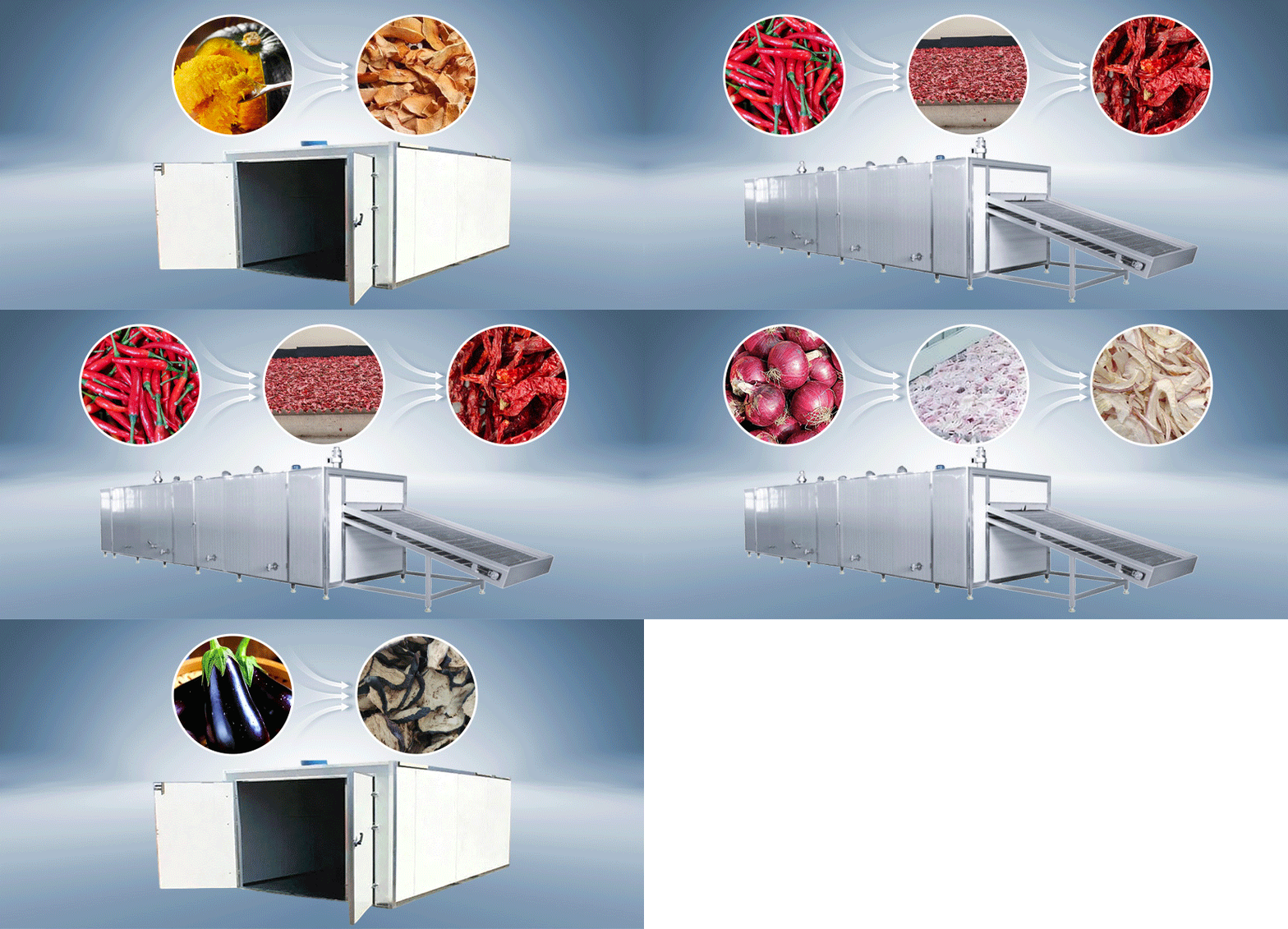
Core Products: Dehydrated onion, dehydrated carrot, dehydrated potato, dehydrated kale
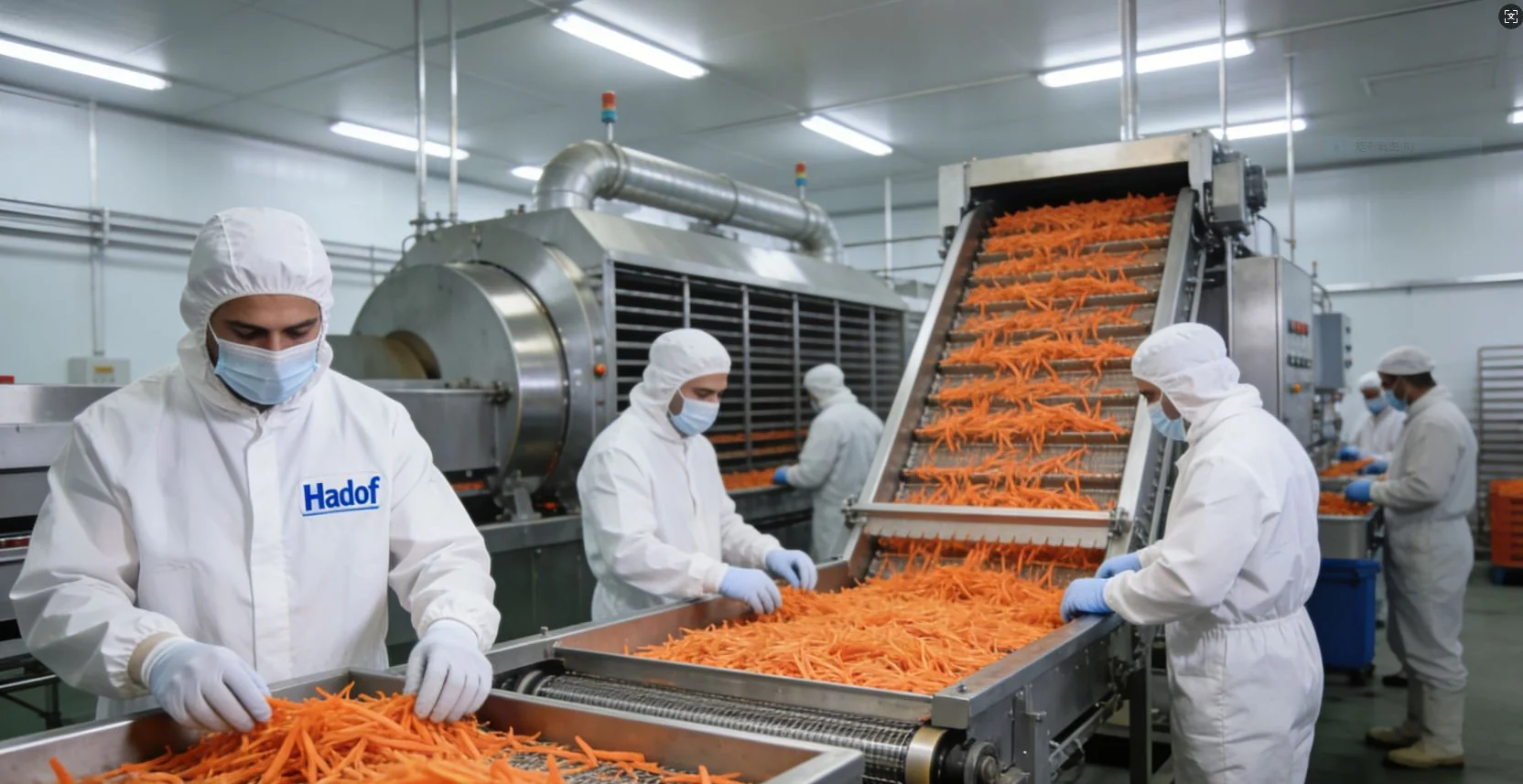
Equipment Configuration: Hadof customized multi-layer mesh belt hot air drying line (with integrated biomass burner)
Commissioning Date: Q3 2019
Ethiopia is the "water tower" of East Africa, boasting volcanic soil and vertical climates ideal for vegetable cultivation. D***E Company in Oromia State had long supplied fresh vegetables to European fast-food giants. However, lacking deep processing capabilities, they were plagued by losses from cosmetically imperfect vegetables and off-season overcapacity.
Traditional methods were a bottleneck:
Staggering Fresh Produce Loss: 30%-35% of harvested vegetables were discarded or sold cheaply due to non-compliance with European appearance standards. Rotten vegetables polluted the environment and represented huge profit loss.
High Rainy Season Transport Costs: During the rainy season, muddy roads to the port of Djibouti led to high spoilage rates for fresh vegetables, often resulting in entire container rejections.
Surge in European Demand for Dehydrated Vegetables: European instant soup and sauce packets needed large quantities of high-quality dehydrated onions and carrots, but D***E lacked the scaled, standardized drying capacity, watching orders go to other countries.
The client's need was direct: transform unsold "grade B vegetables" into high-value dehydrated products meeting European food contact material standards, while adapting to Ethiopia's unstable grid and expensive diesel.
After comparing Indian and German equipment, the client chose us. Our advantage: in-depth research into the East African highlands environment, providing targeted solutions.
Solution: Three Custom Designs Adapted to Ethiopian Conditions
1. "Biomass Energy + Highland Air Compensation" System
Addressing frequent grid outages and imported diesel dependency, we equipped this line with a multi-fuel biomass burner.
Local Fuel Utilization: Leveraged Ethiopia's abundant agricultural waste – coffee husks, corn cobs, peanut cake from oil pressing – as fuel. These waste products, once a burden, became free energy.
Highland Compensation: Above 2000m, lower oxygen reduces combustion efficiency. We designed fans and the combustion chamber to ensure target drying temperatures and airflow are achieved at high altitudes.
2. Flexible Drying Process for Multiple Vegetables
For Dehydrated Onion: A low-temperature, high-airflow process (initial 55°C-60°C) quickly removes surface moisture, preventing sulfide volatilization and browning, resulting in white, highly rehydratable, aromatic product.
For Carrots & Potatoes: A variable process with high-temperature (75°C) enzyme inactivation followed by medium-temperature (60°C) drying maximizes retention of carotenoids and starch structure, with rehydrated texture close to fresh.
Quick screen and feed thickness changes allow one machine to handle different vegetable harvest seasons, operating over 300 days/year.
3. Hygiene and Food Safety Design
Air intakes feature multi-stage filtration to prevent dust pollution from strong highland winds.
The dryer interior uses food-grade 304 stainless steel with no design for easy cleaning and disinfection, meeting EU microbial limits for dehydrated vegetables.
Client Testimonial: "Value Rebirth" from Waste Vegetables to European Markets
After commissioning, D***E Company was fundamentally transformed.
Capacity & Market Breakthrough
Throughput: Processes 20 tons of fresh vegetables daily, converting all previously discarded off-grade produce into high-quality dehydrated vegetables. Product shelf life extended to 18 months, completely solving rainy season transport issues.
Export Certification: The enclosed stainless steel environment helped secure BRC certification and EU Organic certification. By 2024, dehydrated vegetable exports to Germany and the Netherlands grew 400%, now supplying leading European organic supermarket chains.
Significant Economic Benefits
Product Premium: Superior color, aroma, and rehydration compared to Indian and Egyptian competitors allow D***E's products to command prices over 20% higher, successfully entering the European high-end market.
Return on Investment: General Manager Mr. Tesfaye calculated: "We used to throw away 30% of our vegetables as trash, even paying for disposal. Now that 'trash' is our most profitable product line. Using coffee husks and corn cobs as fuel makes energy costs nearly zero. We recouped our entire investment in under 18 months."
Social Responsibility & Environment
Waste Reduction: Prevents thousands of tons of vegetable decay annually, reducing methane emissions and qualifying for Ethiopian carbon credit subsidies.
Farmer Income: The company purchases all vegetables at guaranteed base prices, including cosmetically imperfect ones, boosting incomes for over 2,000 surrounding smallholder farmers.
"European clients used to think Africa could only export raw materials. Hadof's drying line proved that Ethiopia can not only grow the best vegetables but also process world-class dehydrated vegetables. With our highland sunshine and wisdom, we deliver nature's gifts intact to every corner of the world."
—— D***E Agricultural Processing & Export Company, General Manager Tesfaye A.