
On-site Planning

Installation & Commissioning

Automated & Energy Efficient
Client Name: S***V Seafood Group
Country: Kingdom of Norway
Region: M?re og Romsdal County – Core fishing area on Norway's west coast, deep fjords, key region for Atlantic salmon and Arctic cod
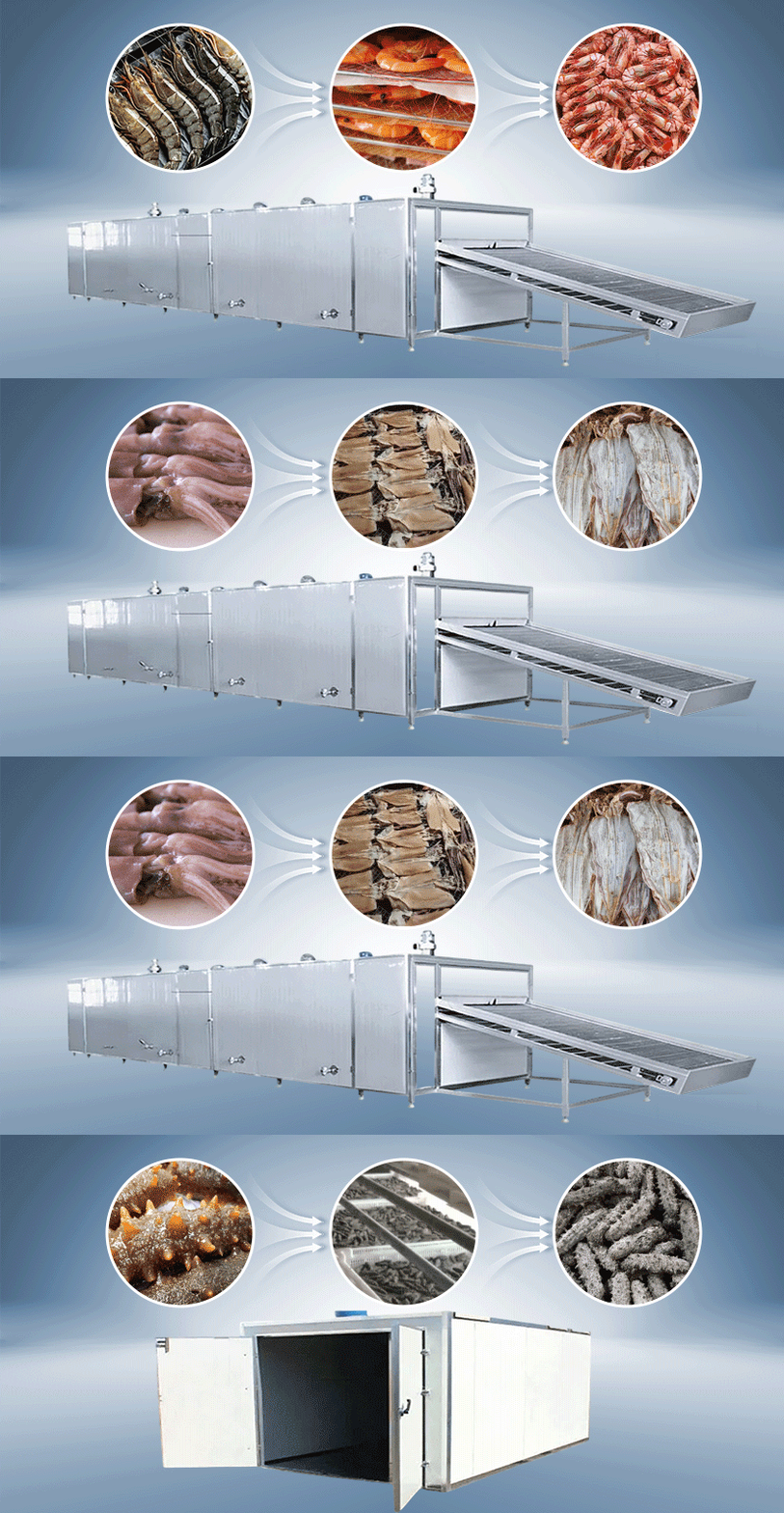
Core Products: Dehydrated salmon strips (high-protein snack), dried Arctic shrimp, cod floss, seafood soup base
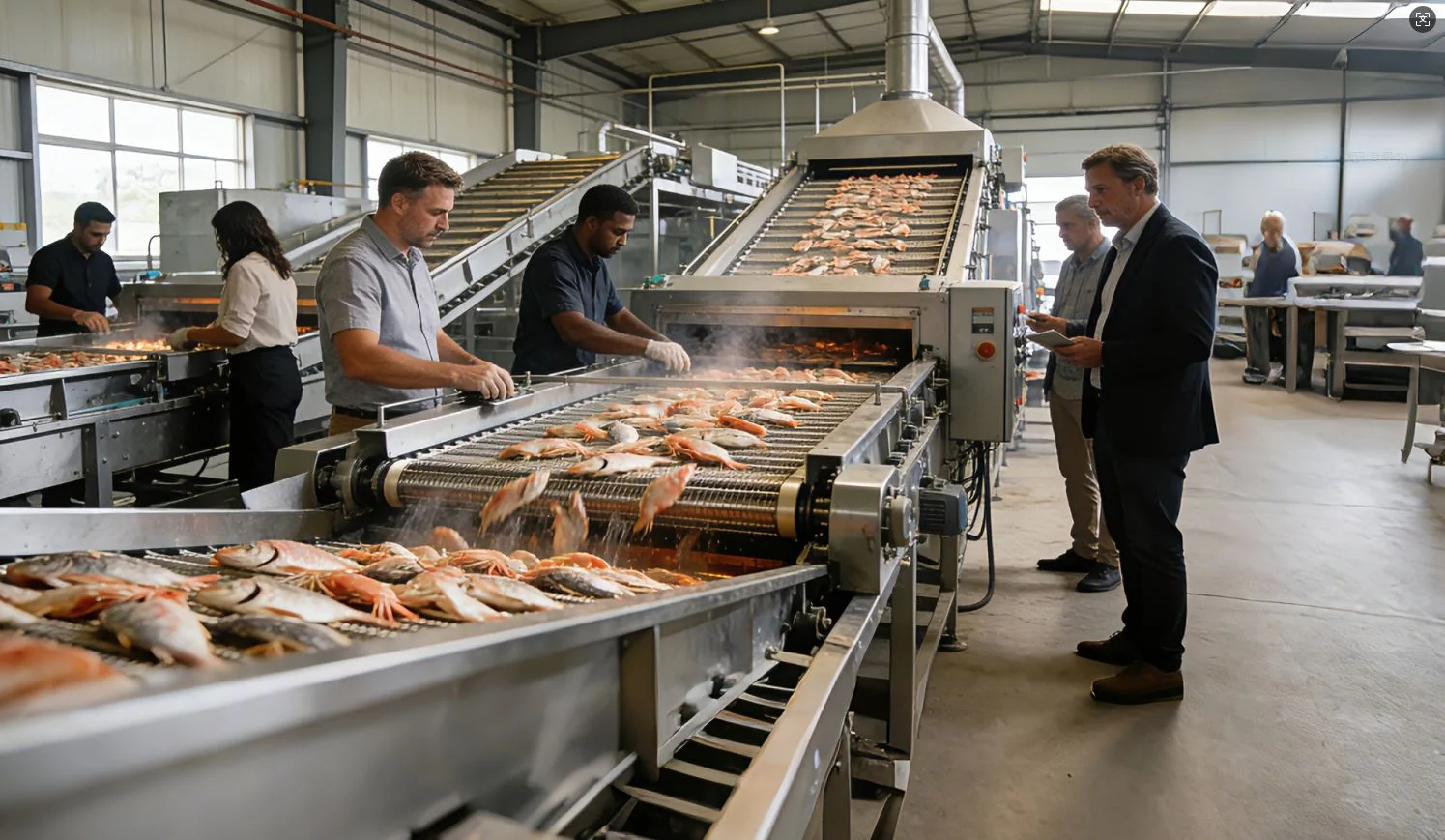
Equipment Configuration: Hadof customized multi-layer mesh belt hot air drying line (with integrated low-temperature vacuum drying module)
Commissioning Date: Q1 2022
Norway is the world's second-largest seafood exporter. Its cold, pure fjords nurture world-class salmon, cod, and Arctic shrimp. S***V Group, based in M?re og Romsdal, traditionally focused on fresh salmon fillets and frozen seafood. However, facing explosive global demand for high-protein healthy snacks, the limitations of traditional processing became increasingly evident.
Low-value Byproducts: During salmon processing, about 15%-20% of trimmings (碎肉 from back and belly) and irregular strips were sold cheaply to fishmeal plants for under �1/kg, a huge waste of resources.
Traditional Drying Quality Bottlenecks: Norway has a long history of Viking stockfish, but traditional cold air drying takes 2-3 months, depends on specific weather, and risks pests and mold, failing modern hygiene standards.
Soaring Asian Demand: Demand from Japan, Korea, and China for ready-to-eat seafood snacks and seasoning grew exponentially. S***V needed a solution to quickly transform processing byproducts into high-value snacks while preserving nutrition and flavor.
The client's needs were clear: fully retain salmon's Omega-3 fatty acids without protein denaturation, achieve a crispy, delicious texture, and comply with Norway's strict environmental rules and high electricity costs.
After comparing Icelandic and Danish equipment, S***V chose us. Our advantage: developed a specialized nutrition-lock drying process targeting seafood's high-protein, high-fat, easily oxidized nature.
Solution: Three Custom Designs for Nordic Seafood Characteristics
1. "Low-Temperature Vacuum + Nitrogen Protection" Fresh-Lock System
Addressing the challenge of salmon's easily oxidized Omega-3, we used low-temperature vacuum drying with nitrogen protection.
Low-Temperature Vacuum Locks Nutrition: Under vacuum, water boils at lower temperatures, allowing drying at 35°C-45°C, far below traditional hot air. Salmon protein denaturation is below 5%, Omega-3 retention up to 92%. Rehydrated product tastes very close to fresh.
Nitrogen Prevents Oxidation: Food-grade nitrogen fills the chamber during drying, eliminating oxygen, completely preventing rancidity from fat oxidation, extending shelf life to 24 months.
2. Flexible Process for Different Seafoods
For Salmon Strips (high-value core): Low-temperature vacuum slow drying for 8-10 hours yields an appealing orange-red color, crispy texture that melts in the mouth – perfect for premium fitness snacks.
For Arctic Shrimp (hot Asian market): Variable-temperature vacuum drying, with low-temperature initial phase locking freshness and a short high-temperature final phase for crispiness. Shells are edible, meat sweet and chewy.
For Cod Floss (baby food): Agitated vacuum drying with a shredding mechanism produces fine, dense, white fibers with no additives.
3. Waste Heat Recovery & Green Energy
Norway has abundant hydropower but high electricity costs. We equipped the line with a closed-loop heat pump vacuum system and waste heat recovery, achieving a COP over 3.5, saving 65% energy compared to traditional electric heating.
The system can utilize Norway's abundant cold fjord water as a cooling source, maintaining vacuum pump efficiency even in summer heat.
Client Testimonial: "Deep-Sea Value Rebirth" from Waste Byproduct to Global Snack
After commissioning, S***V's business expanded rapidly.
Capacity & Market Breakthrough
Throughput: Processes 15 tons of seafood trimmings daily, converting all previously low-value fishmeal into ready-to-eat seafood snacks. Product value increased over 20 times.
High-End Market Access: The low-temperature vacuum lock-fresh process helped secure EU EFSA certification and Japan's JAS Organic certification. By 2024, salmon crisp exports to Japan and Korea grew 500%, with products in Tokyo Haneda Airport duty-free and Seoul Lotte Department Store.
Significant Economic Benefits
Product Premium: Low-temperature vacuum dried salmon crisps retail for �80-100/kg in Asia, 5-8 times the price of fresh salmon.
Return on Investment: Group CEO Mr. Larsen calculated: "Those trimmings used to go for under �1/kg to fishmeal plants. Now as seafood snacks, they average over �50/kg. From this alone, we recouped the entire investment in under a year. Plus, the heat pump vacuum system uses even less electricity than expected, expanding our margins."
Environmental & Social Responsibility
Zero Waste Goal: Reduces low-value seafood waste by about 4,000 tons annually, increasing resource utilization to 98%, earning the Norwegian Seafood Council's "Blue Circular Economy Model Enterprise" title.
Global Carbon Reduction: Compared to frozen transport, dehydrated products reduce shipping weight by 70% and carbon emissions by 65%, contributing to climate action.
"A thousand years ago, Vikings used the Arctic wind to dry cod, letting Norwegian seafood accompany their voyages. Today, Hadof's drying line lets us continue our ancestors' wisdom with modern technology – locking the nutrition and freshness of the cold fjords into every strip, letting the world taste the pure gift of the Norwegian Sea."
—— S***V Seafood Group, CEO Lars Eriksen