
On-site Planning

Installation & Commissioning

Automated & Energy Efficient
Client Name: W***A Apple Cooperative
Country: United States of America
Region: Yakima Valley, Washington – The largest apple producing region in the US, accounting for over 60% of national production, renowned for varieties like Red Delicious, Gala, and Fuji
Core Products: Apple crisps, dried apple slices (no additives), apple powder (food ingredient), organic apple snacks
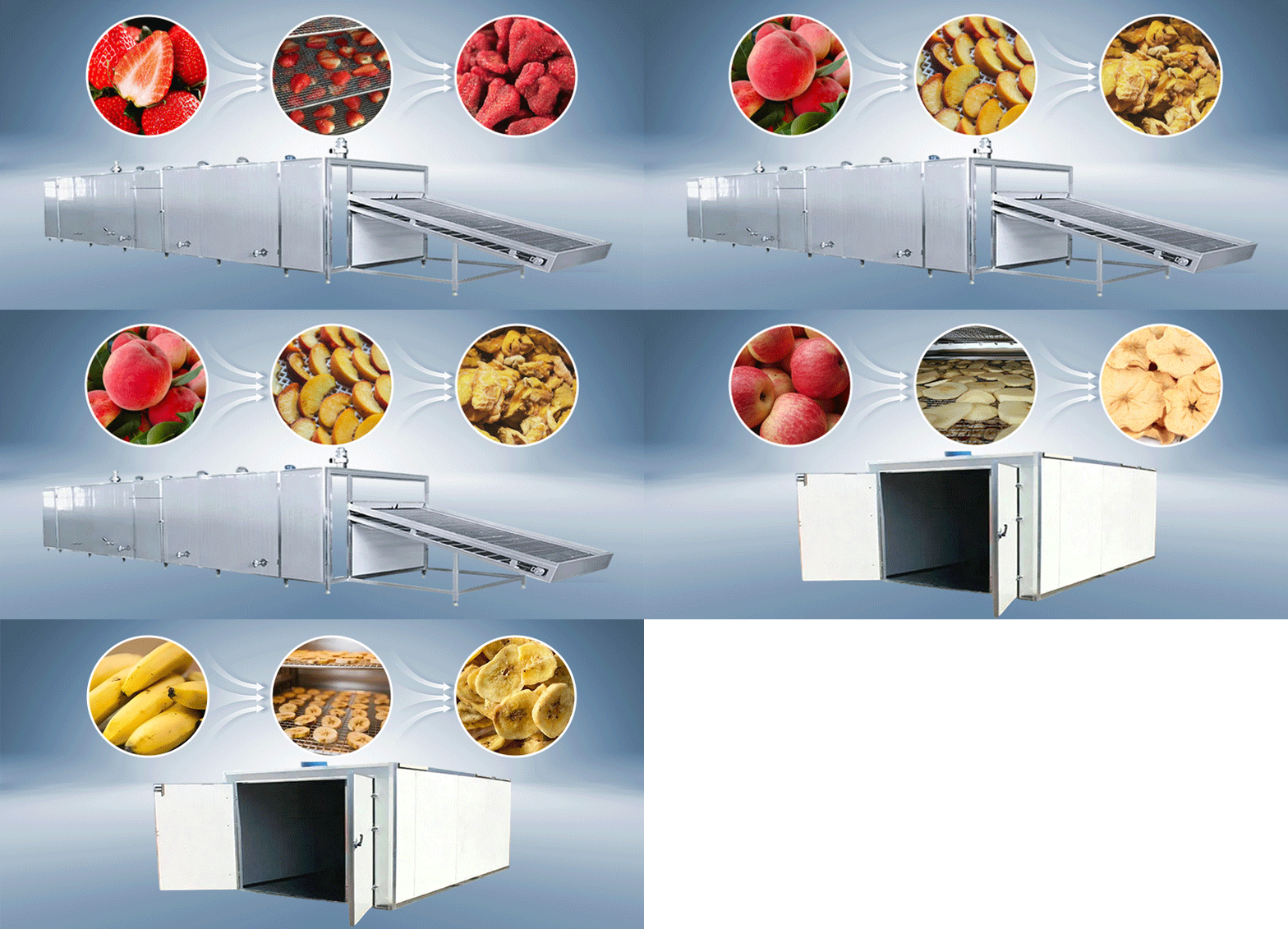
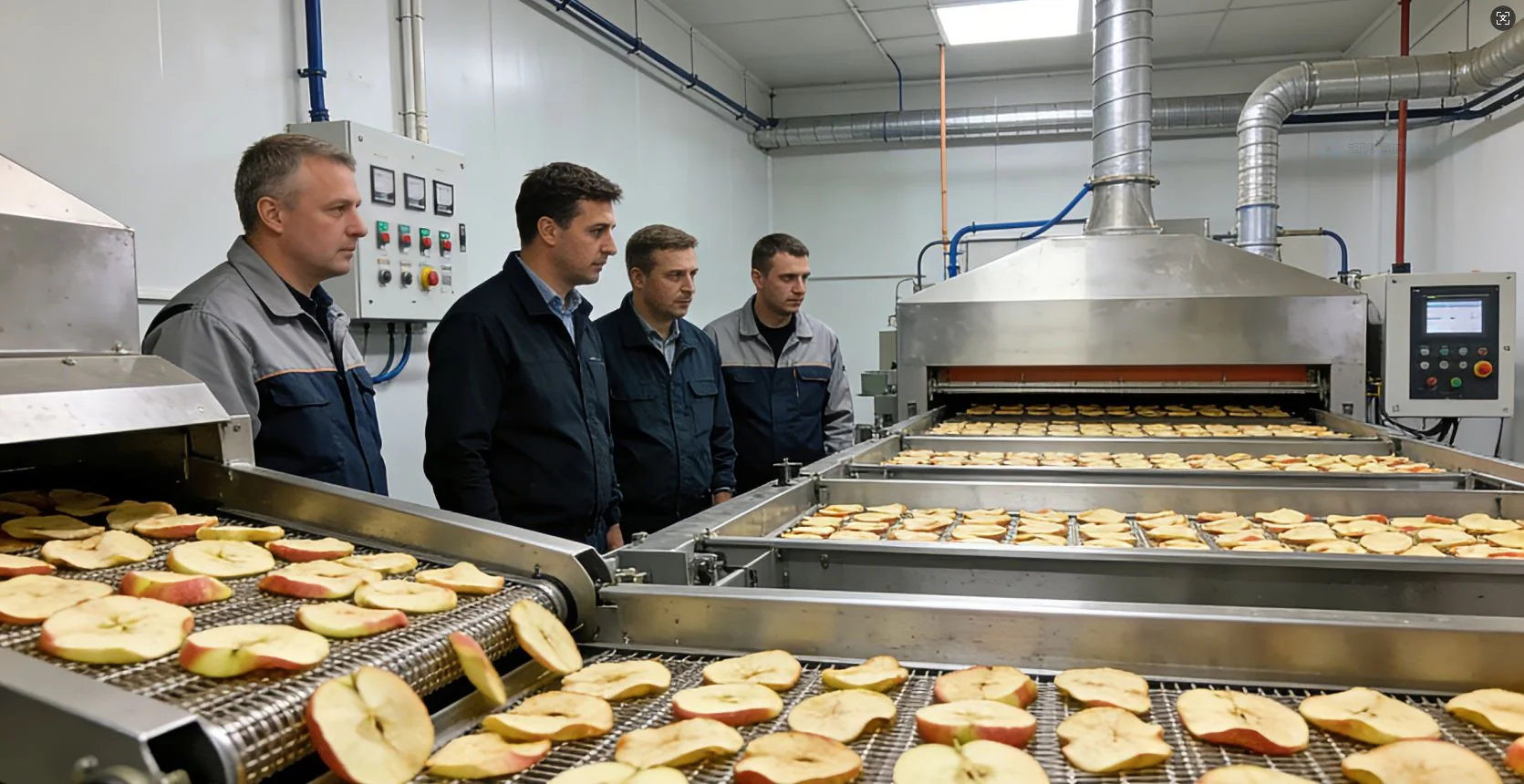
Equipment Configuration: Hadof customized multi-layer mesh belt hot air drying line (with integrated vacuum drying and anti-browning pretreatment modules)
Commissioning Date: Q3 2021
Washington State is the heart of the US apple industry. The volcanic soils of the Yakima Valley and irrigation from the Columbia River nurture world-class apples. W***A Cooperative, with over 80 years of apple growing and fresh sales history, represents over 200 member farms and produces 300,000 tons annually. However, facing explosive North American demand for healthy snacks, the limitations of the traditional model became increasingly apparent.
Fresh Fruit Surplus & Grade B Predicament: US supermarkets impose appearance standards on apples – minor flaws in size, color, or shape relegate fruit to processing grade. Annually, 20%-25% of apples with minor skin blemishes, small size, or harvest bruising cannot enter the fresh market and are sold to juice factories for $0.1-$0.2/lb, a huge waste.
Poor Quality of Traditional Drying: The North American market for apple crisps has long relied on imports from China and Chile, with insufficient local processing capacity. Traditional hot air drying often causes browning, hard texture, and frequently uses color protectants and added sugar, conflicting with US consumer demand for "clean label" and "no additives."
Soaring Demand for Organic Apples: The US organic food market grows 8%-10% annually. Organic apple crisps are in short supply in channels like Whole Foods. W***A Cooperative has some organic orchards but lacks deep processing capacity to capitalize on organic certification.
Seasonal Labor Shortages: The concentrated harvest requires processing of Grade B fruit. Traditional sun-drying is inefficient and labor-intensive.
The client's needs were precise: produce apple crisps with no added sugar, no sulphuring, and natural color, fully preserving natural sweetness and aroma, while complying with strict US food safety regulations and high energy costs.
After comparing Canadian and Italian equipment, W***A Cooperative ultimately chose our company. Our advantage lay in developing a specialized additive-free, fresh-lock drying process for apples, known for their high sugar content, browning, and dense flesh.
Solution: Three Custom Designs for Washington State Apple Characteristics
1. "Vacuum Drying + Anti-Browning Pretreatment" Color-Lock System
Addressing the challenges of rapid enzymatic browning after slicing and nutrient loss from high-temperature drying, we used vacuum drying combined with natural anti-browning pretreatment technology.
Natural Color Protection: After slicing, a brief dip in a natural solution of Vitamin C and citric acid (compliant with US FDA "Generally Recognized as Safe" standards) replaces traditional sulfite treatment, eliminating sulfur dioxide residues.
Vacuum Locks Freshness: Under vacuum, drying temperature is controlled at 50°C-60°C, 20°C-30°C lower than traditional hot air. Natural fruit sugars do not caramelize, resulting in a natural light yellow to pale gold color and 60% higher Vitamin C retention.
Crispy Texture: Precise control of vacuum level and drying curve creates a crispy, honeycomb structure that melts in the mouth without sticking to teeth.
2. Flexible Process for Different Varieties and Specifications
For Fuji Apples (high-sugar core): Uniform 3mm slices undergo vacuum drying for 8-10 hours, resulting in pale gold rounds with concentrated sweetness and crispy texture, with no added sugar.
For Gala Apples (sweet-tart flavor): Slightly thinner slices (2.5mm) and shorter drying time preserve their characteristic refreshing acidity, creating sweet-tart mixed fruit slices.
For Apple Powder (food ingredient): Dried apple dices, after low-temperature vacuum drying, are ground under nitrogen protection into a fine, light yellow, aromatic powder used in baking, oatmeal, and baby food.
3. Waste Heat Recovery & Clean Energy Utilization
Washington State has abundant but expensive hydropower. We equipped the line with a closed-loop heat pump vacuum system and waste heat recovery, achieving a system COP over 3.8, saving 55% energy compared to traditional electric heating.
Vacuum pumps use variable frequency drives, automatically adjusting power based on load to further reduce electricity costs.
Client Testimonial: "Value Rebirth" from Grade B Fruit to Mainstream US Supermarkets
After commissioning, W***A Cooperative's business expanded rapidly.
Capacity & Market Breakthrough
Throughput: Processes 25 tons of Grade B apples daily, converting previously low-value off-grade fruit into premium apple crisps and powder. The selling season extends year-round.
High-End Market Access: The additive-free, non-sulphured vacuum drying process helped secure US USDA Organic, Non-GMO Project, and Clean Label certifications. By 2024, products entered mainstream chains like Whole Foods and Kroger, and became a first-class snack supplier for several airlines.
Significant Economic Benefits
Product Premium: Additive-free apple crisps retail for $8-10/lb, 10-15 times the price of fresh fruit. Organic crisps command even higher premiums, at $12-15/lb.
Return on Investment: Cooperative CEO Mr. Johnson calculated: "Those Grade B fruits used to go to juice factories for under $0.2/lb. Now as apple crisps, they average over $8/lb. From this alone, we recouped the entire equipment investment in under 18 months. Plus, the heat pump vacuum system uses even less electricity than expected, with operating costs far below Italian equipment."
Environmental & Social Responsibility
Zero Waste Goal: Reduces Grade B apple waste by about 8,000 tons annually, increasing resource utilization to 98%, earning the Washington State Department of Agriculture "Sustainable Leadership Award."
Farmer Income: The cooperative purchases all quality-grade apples at guaranteed base prices, including previously low-value Grade B fruit, stabilizing incomes for over 200 surrounding small and medium-sized farms.
"The Washington sun and volcanic soil give us the world's most beautiful apples, but we used to watch nearly a quarter of our harvest sold cheaply just because of 'appearance' issues. Hadof's drying line showed us that real technology perfectly preserves the inner nutrition and natural flavor of every apple, letting Washington's 'rubies' reach the world in their purest form."
—— W***A Apple Cooperative, CEO Robert Johnson