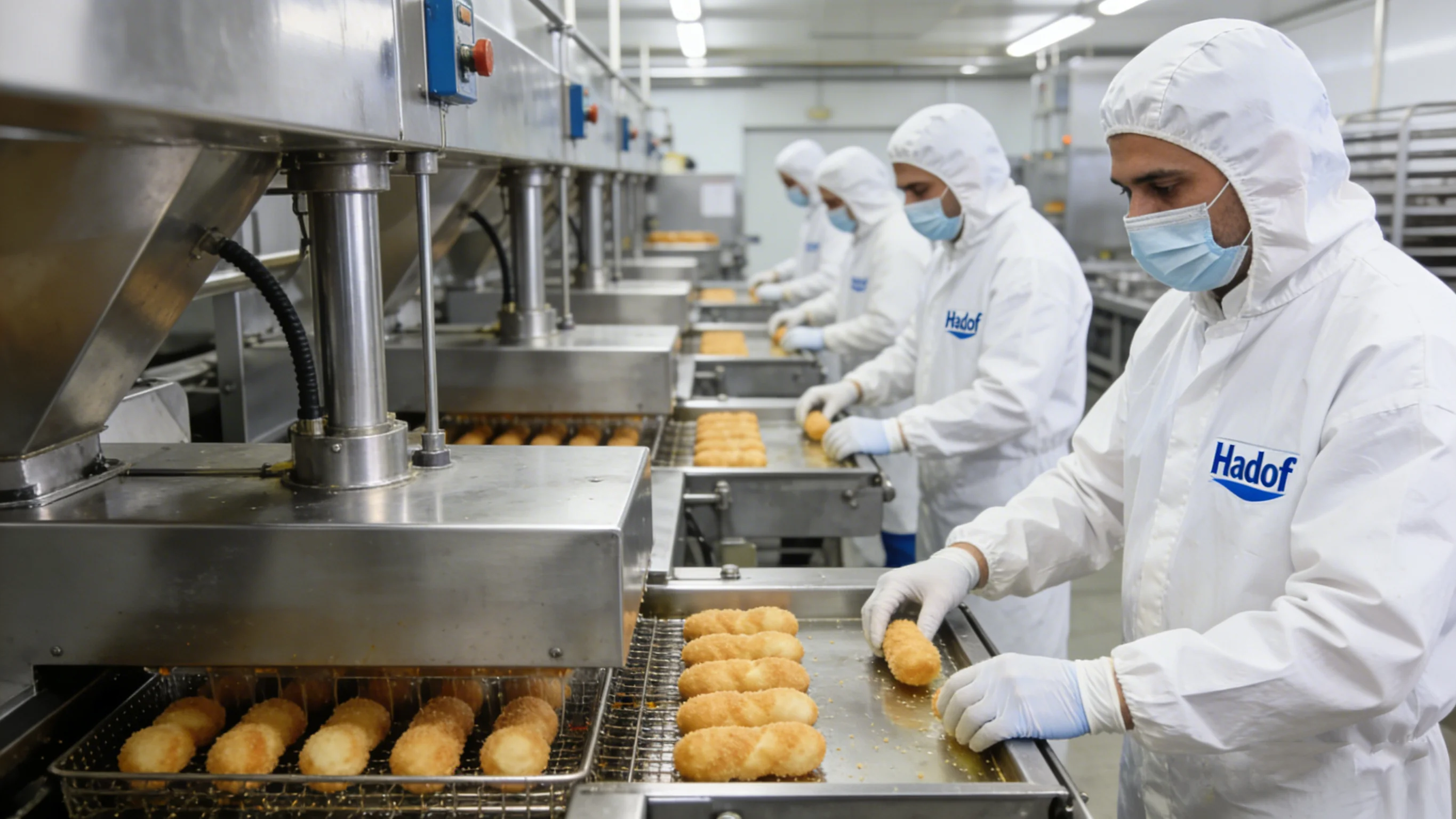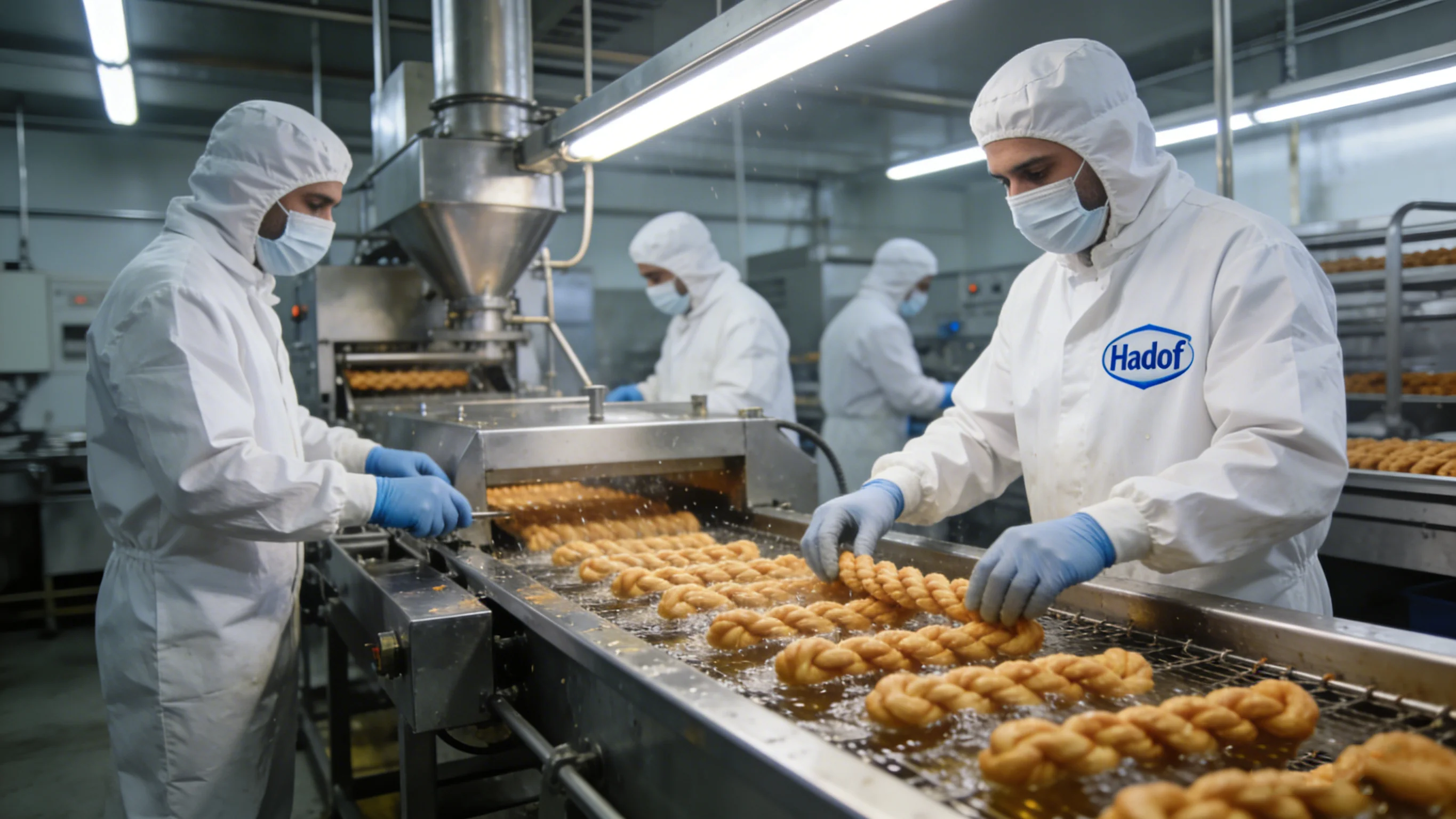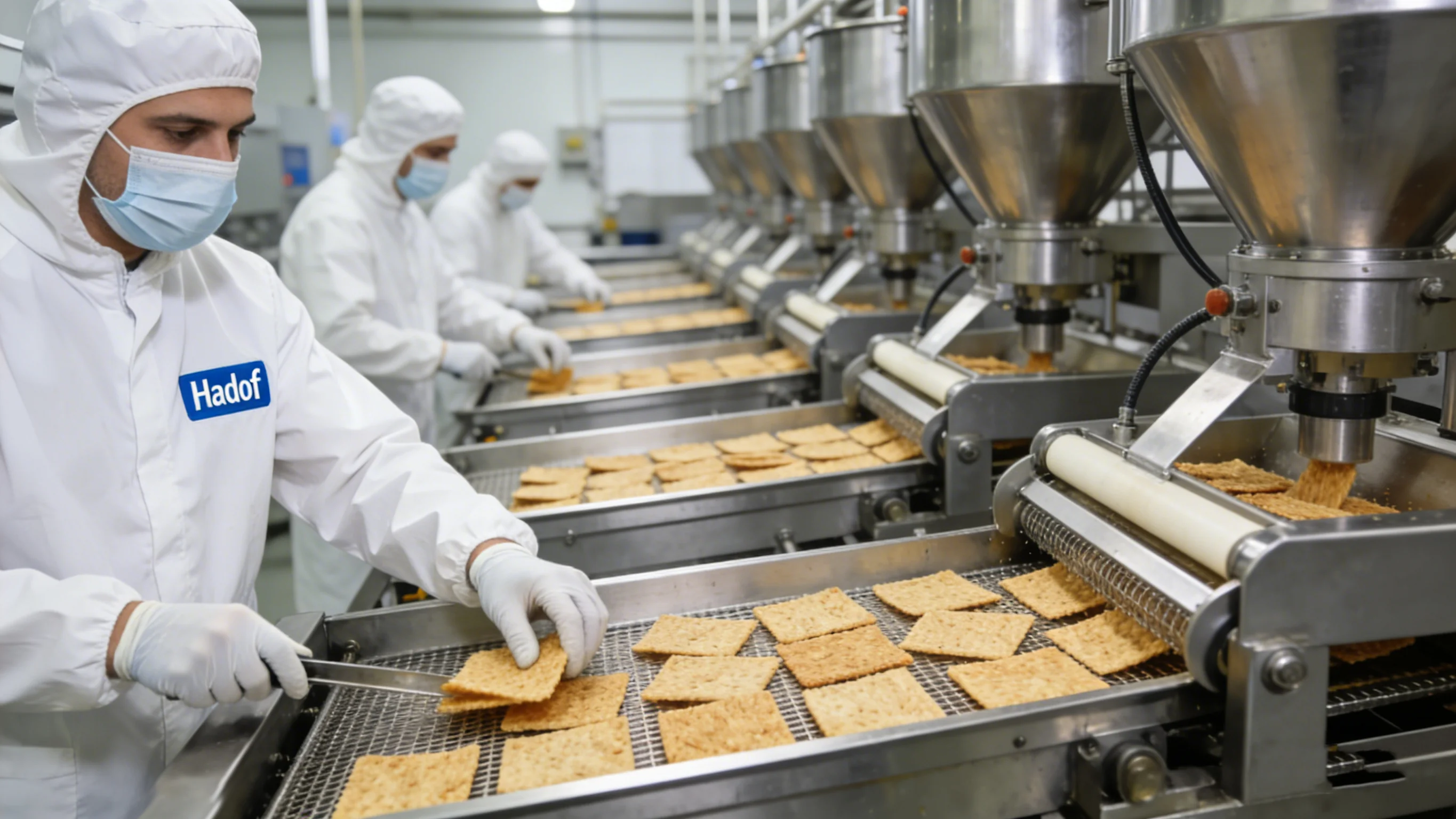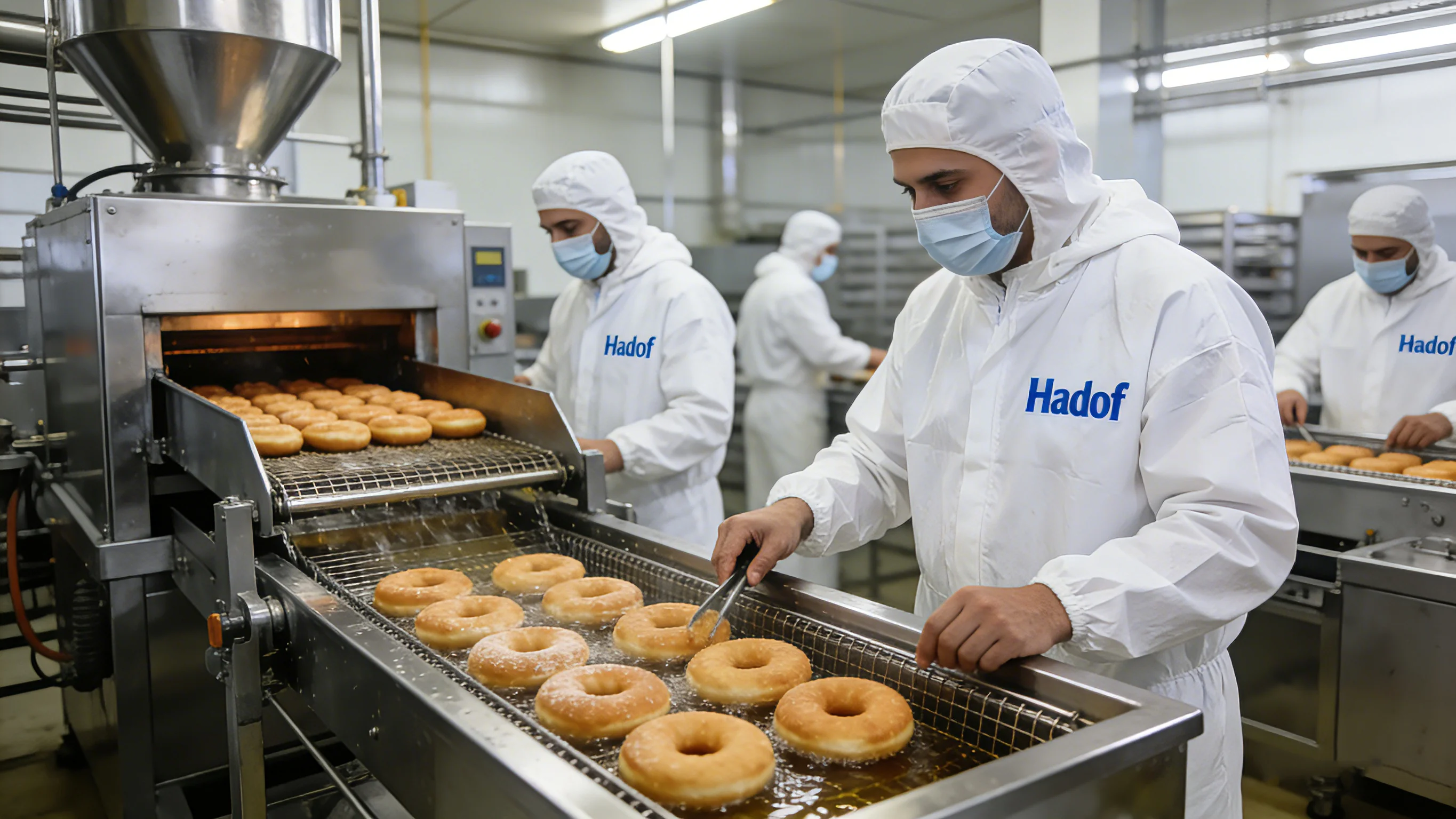

On-site Planning

Installation & Commissioning

Automated & Energy Efficient
Client Name: PT Indofood Sukses Makmur Tbk – Instant Noodle Division
Country: Republic of Indonesia
Region: Cilegon Modern Industrial Park, Banten Province – a core industrial area in western Java
Core Products: Fried instant noodles for stir?fried style, curry chicken cup noodles, Indonesian fried noodle flavor dry noodles, spicy vermicelli cups
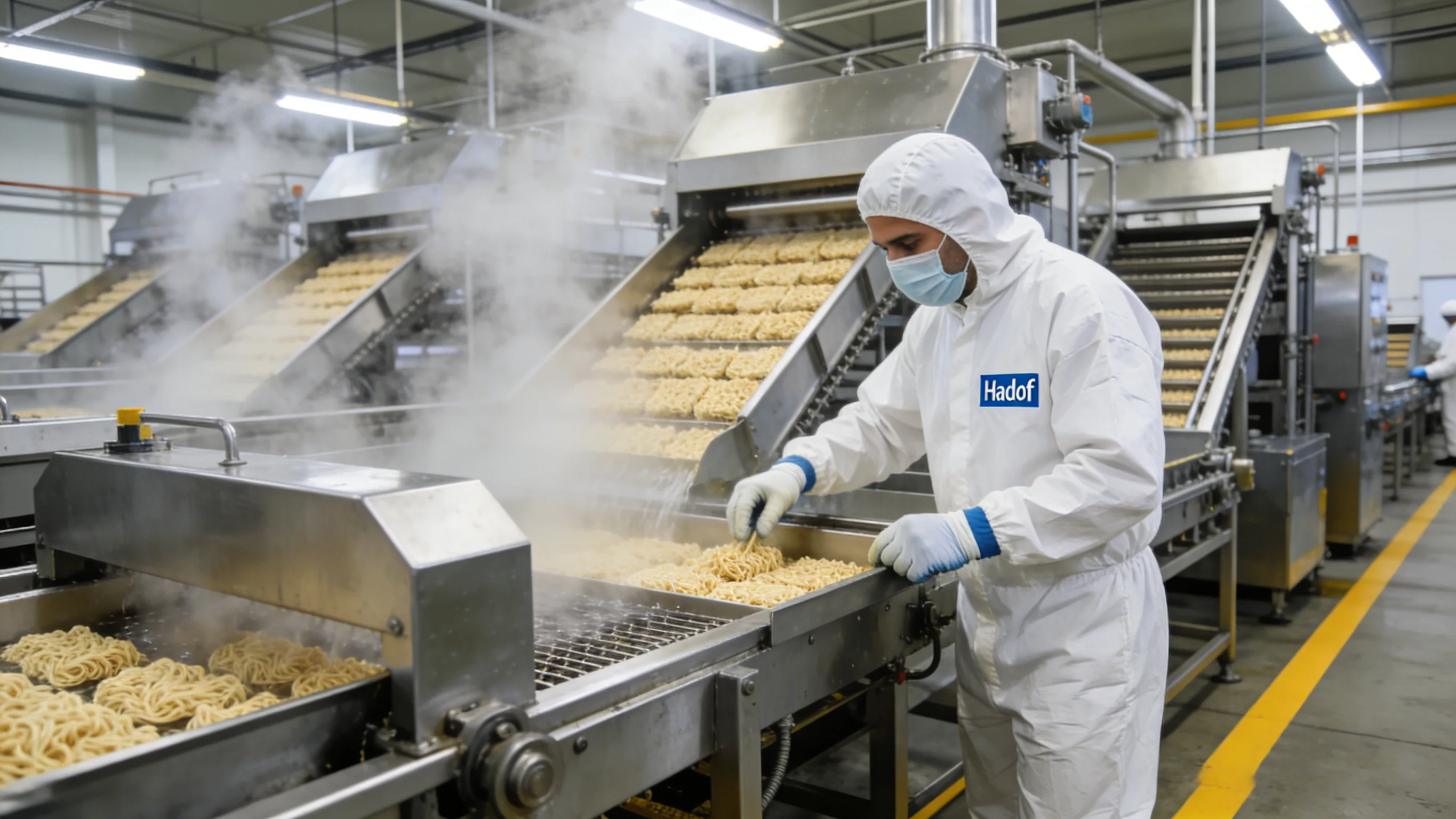
Equipment Configuration: Hadof custom continuous dough mixing and rolling + steam pre?gelatinizing + fully automatic frying integrated line (capacity 60,000 packs/shift, including cooling and packaging integration)
Commissioning Date: Q1 2023
Indonesia is the world's second largest consumer of instant noodles, with over 13 billion packs consumed annually. The Indomie brand, under Indofood, holds more than 70% of that market share. The Cilegon plant in Banten is one of Indofood's largest production facilities, supplying the entire Java island and export markets. Despite Indomie's global reputation, the existing frying lines faced three major challenges due to rising consumer demands for health, texture, and production efficiency:
Conflict between oil content and health needs: Modern consumers seek "low oil without sacrificing flavor." The old line produced noodle blocks with oil content as high as 24%, failing to meet the expectations of younger consumers and export markets for healthier instant food.
Inconsistent transition from steaming to frying: In the traditional process, noodles went directly from steaming to frying, resulting in uneven surface moisture and inconsistent oil absorption – some blocks were too hard, others too oily.
Low changeover efficiency: Indonesia's market demands diverse flavors (curry, stir?fried, chicken soup, etc.), and the old line required over six hours of downtime for cleaning and changeover, negatively impacting overall OEE.
Indofood's technical team evaluated equipment from Japan, Korea, and Europe before ultimately choosing to partner with Hadof. We didn't just supply a stand?alone fryer; we spent time at the Cilegon plant analyzing local tapioca starch blends, palm oil characteristics, and operator habits to develop this industrial instant noodle frying line designed for "low oil + fast changeover + robust flavors."
1. Intelligent Dual?Zone Frying + Hot Air Recovery – Oil Content Reduced by 5%
To achieve the chewy texture preferred by Indonesian consumers, we divided the frying section into two independent temperature zones: Zone 1 (high temperature, 190°C) quickly sets the surface, locking in the gelatinized structure; Zone 2 (low temperature, 165°C) slowly dehydrates, allowing uniform internal moisture vaporization. A hot air circulation system above the fryer recovers heat for pre?steam drying, improving overall thermal efficiency by 22% and reducing the oil content of noodle blocks from 24% to 18.5%, while also improving rehydration.
2. Steam Pre?gelatinization + Online Moisture Monitoring – Ensuring Consistent Crispness for Every Block
We upgraded the steamer with a four?stage saturated steam injection system, ensuring full gelatinization within 90 seconds. An infrared online moisture meter was added after steaming, feeding real?time data to the fryer to automatically adjust frying time and temperature. Even when tapioca starch ratios fluctuate seasonally, the coefficient of variation for noodle block moisture is kept within 2%.
3. CIP Self?Cleaning + Modular Seasoning System – Quick Flavor Changeovers for Indonesia's Diverse Tastes
To meet the demand for 3?4 flavor changes per week, we installed high?pressure rotating nozzles at the bottom of the fryer tank, enabling a cleaning cycle with food?grade detergent that reduced downtime from 6 hours to 1.5 hours. The seasoning drums use a quick?change design; changing flavors only requires replacing the drum liner and spray head, eliminating cross?contamination between curry and stir?fried flavors. During the 2023 Eid al?Fitr season, this line produced six different instant noodle flavors in seven days, reaching a total of 4.2 million packs and setting a new production record for the Cilegon plant.
4. Long?Life Palm Oil Filtration System – Adapted to Tropical Heat, Reducing Oil Consumption Costs
With year?round temperatures above 30°C, palm oil oxidizes quickly. We designed a dual?loop filtration system: an external low?temperature oil storage tank and continuous low?temperature vacuum filtration in the frying section to remove polar compounds generated during frying. After the upgrade, oil replacement intervals increased from 3 days to 7 days, reducing oil consumption per ton of product by 26%, saving Indofood over 5 billion Indonesian rupiah annually in palm oil costs.
Capacity and Quality Leap
Daily capacity: Per line output increased from 120,000 packs/shift to 180,000 packs/shift, with 15 days of continuous operation without cleaning shutdowns. In 2023, this line produced over 120 million packs, with the yield rate rising from 95.2% to 98.7%.
Channel Breakthrough
The reduced oil content and fully enclosed clean production environment helped Indomie meet new EU food export standards. From the second half of 2023, exports to Australia and the UK increased by 35%. The "lower?oil" stir?fried noodles produced on this line are now available in modern supermarkets and e?commerce platforms across Indonesia, with a 28% increase in repeat purchases among younger consumers.
Economic Benefits
Return on Investment: The plant manager at Indofood's Cilegon facility stated: "The traditional frying line required 9 operators per shift; now the entire line runs with just 3. We save over 1.2 billion Indonesian rupiah annually in labor costs alone. Combined with lower oil consumption and higher capacity, the actual payback period was under 14 months."
Product Premium: The healthier low?oil profile allows the new noodle series to command a 12% higher retail price, yet it remains in high demand, serving as a key pillar in Indofood's premiumization strategy.
"Hadof's equipment helped us redefine Indonesian instant noodles – no longer just cheap fried food, but a world?class product that balances taste and health. Now our lower?oil Indomie not only sells well at home, but also sits on supermarket shelves in Sydney and London."
—— Bambang Sutrisno, Production Director (Cilegon Plant), PT Indofood Sukses Makmur Tbk