
On-site Planning

Installation & Commissioning

Automated & Energy Efficient
Client Name: Dongwon F&B Co., Ltd.
Country: Republic of Korea
Region: Wando-gun, Jeollanam-do – the largest seaweed farming and processing hub in Korea
Core Products: Classic sesame oil fried seaweed, wasabi honey crispy seaweed, olive oil low?salt seaweed, seaweed rice seasoning flakes
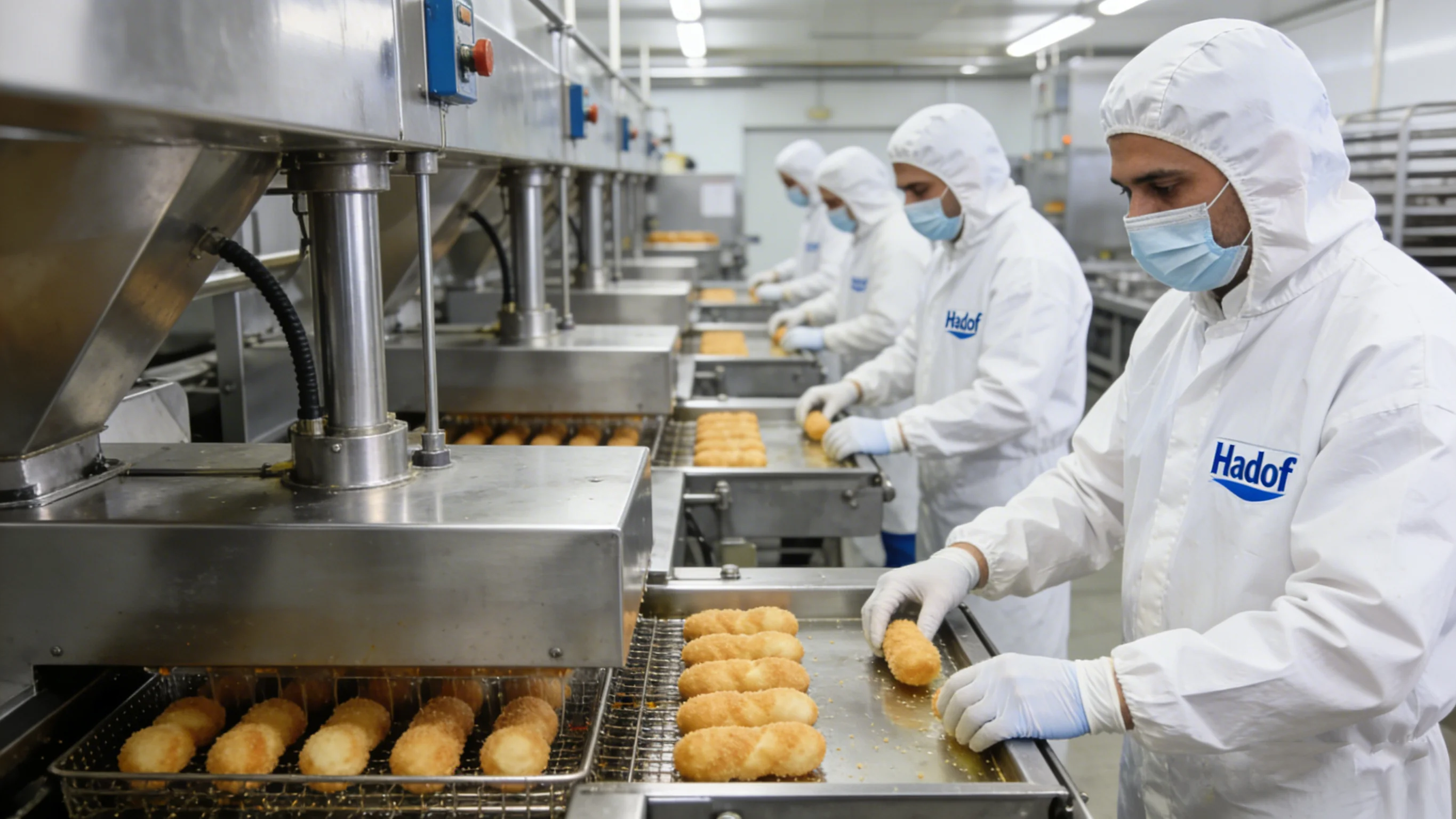
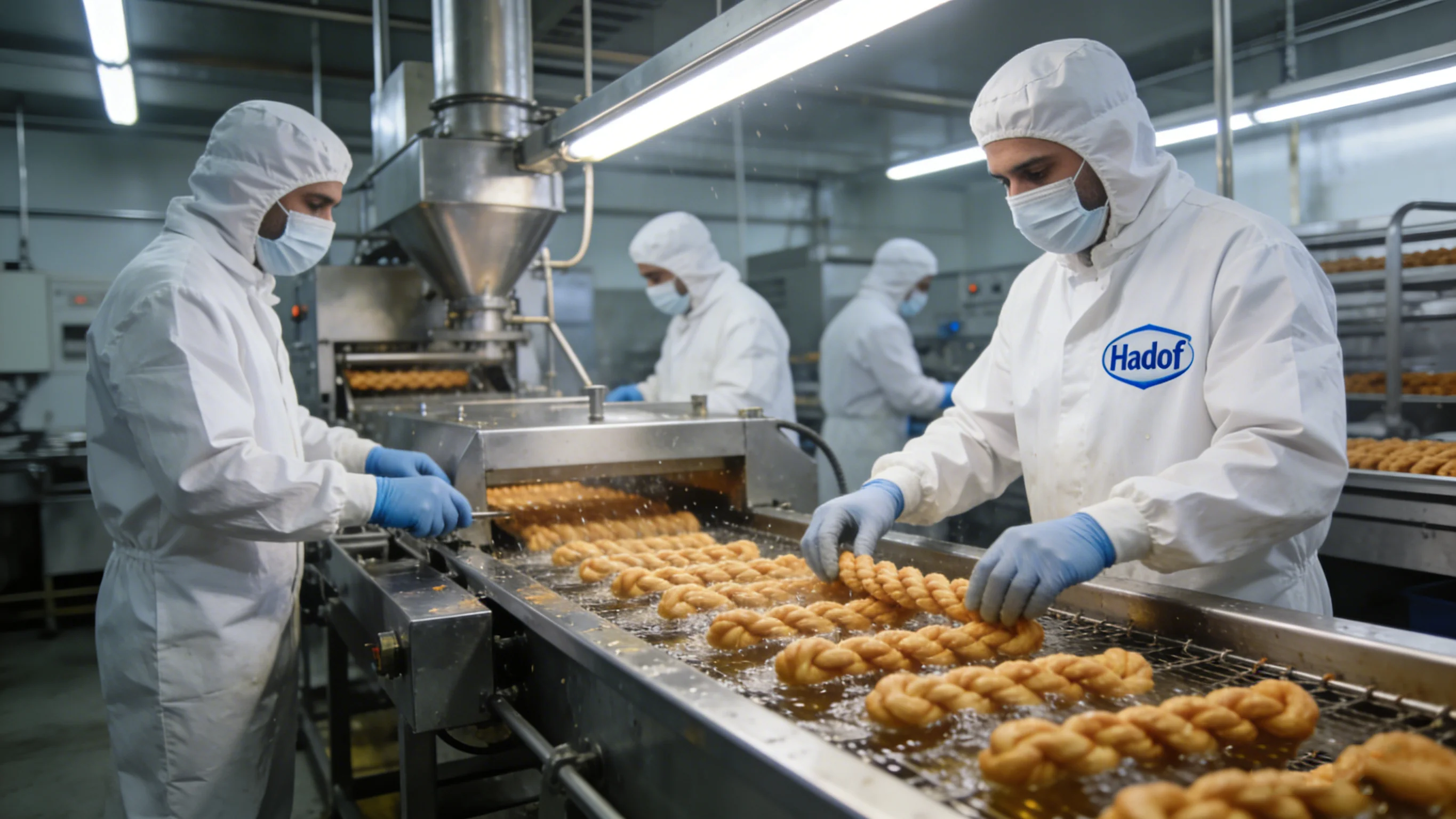
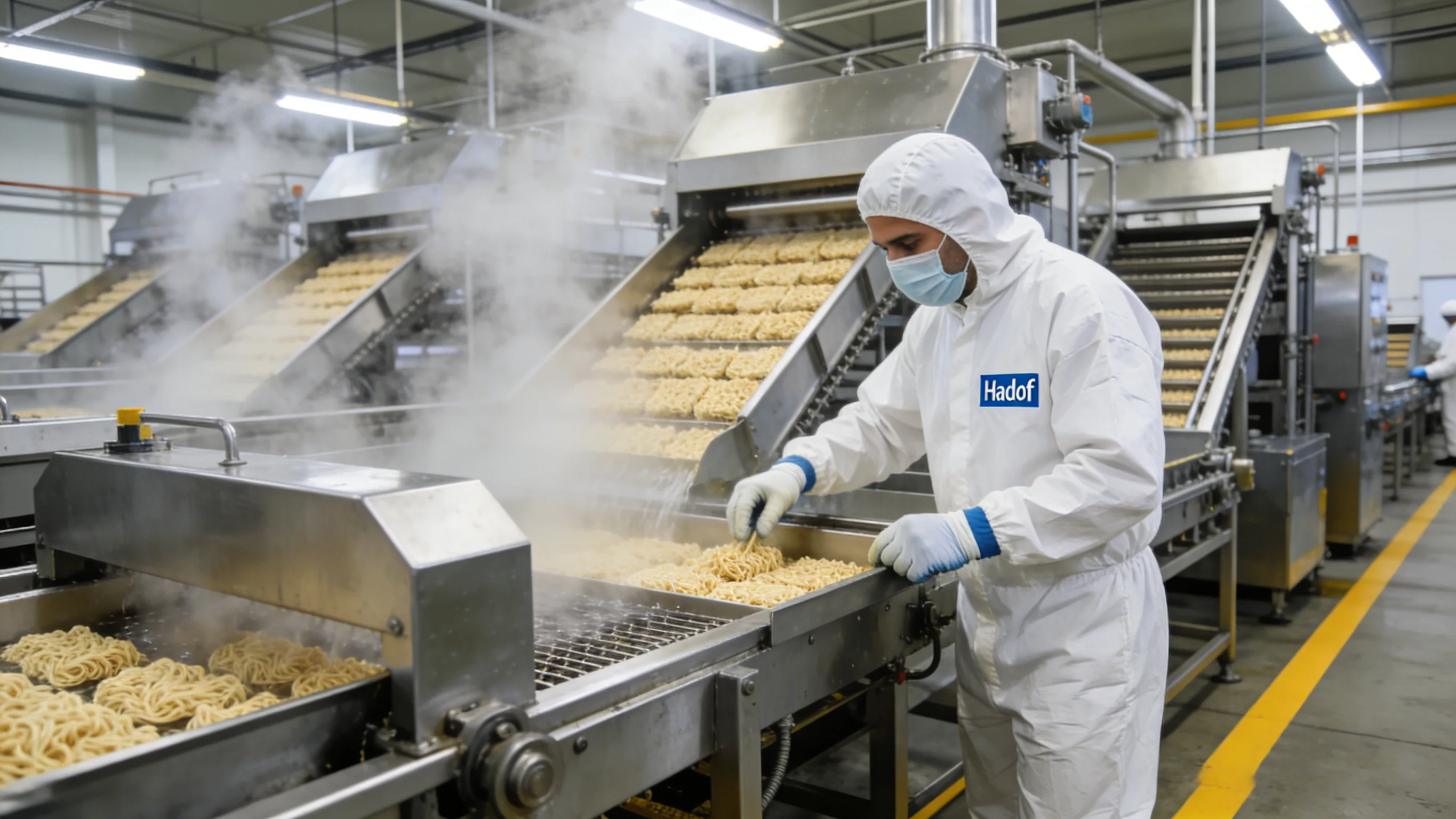
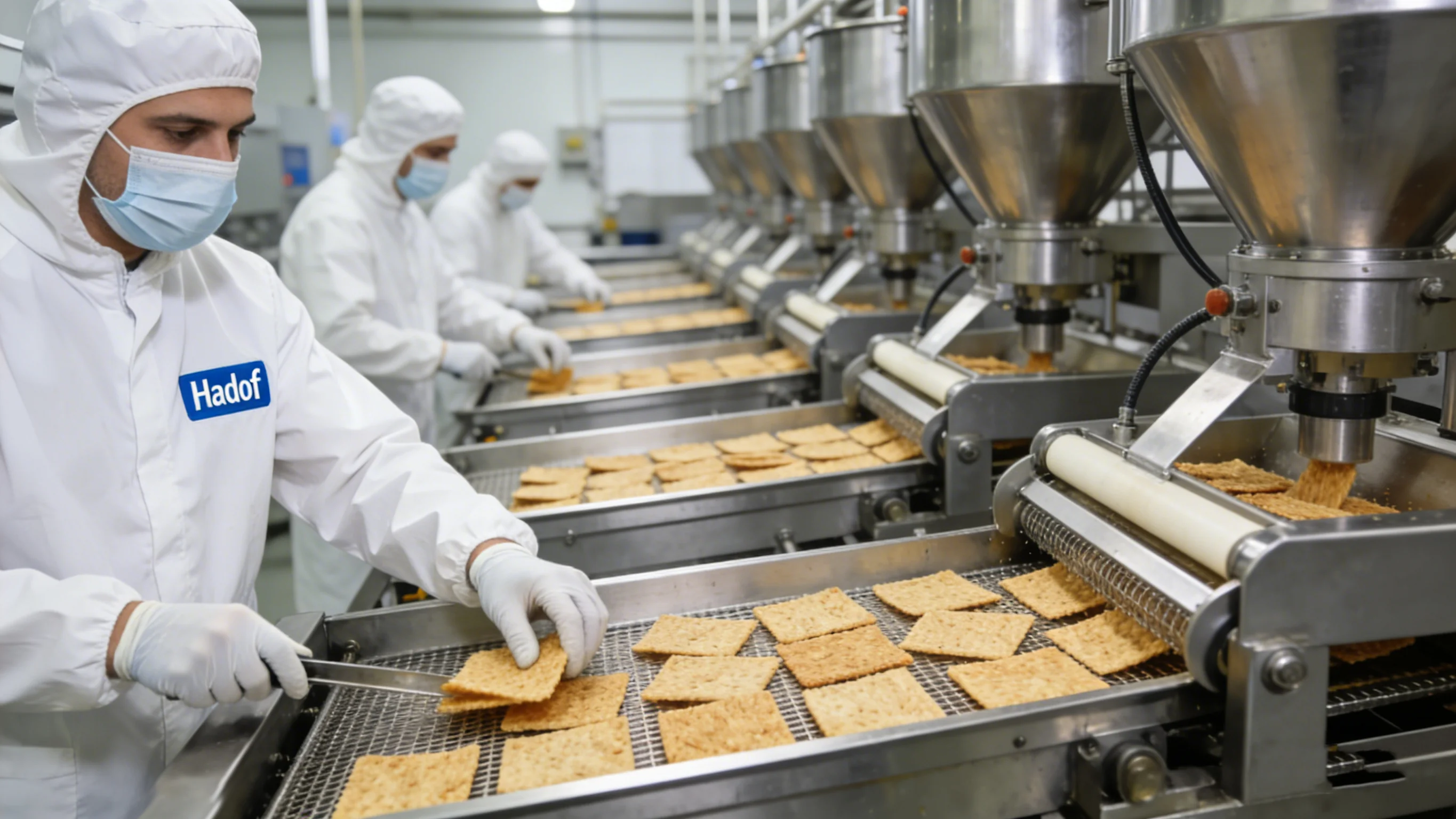
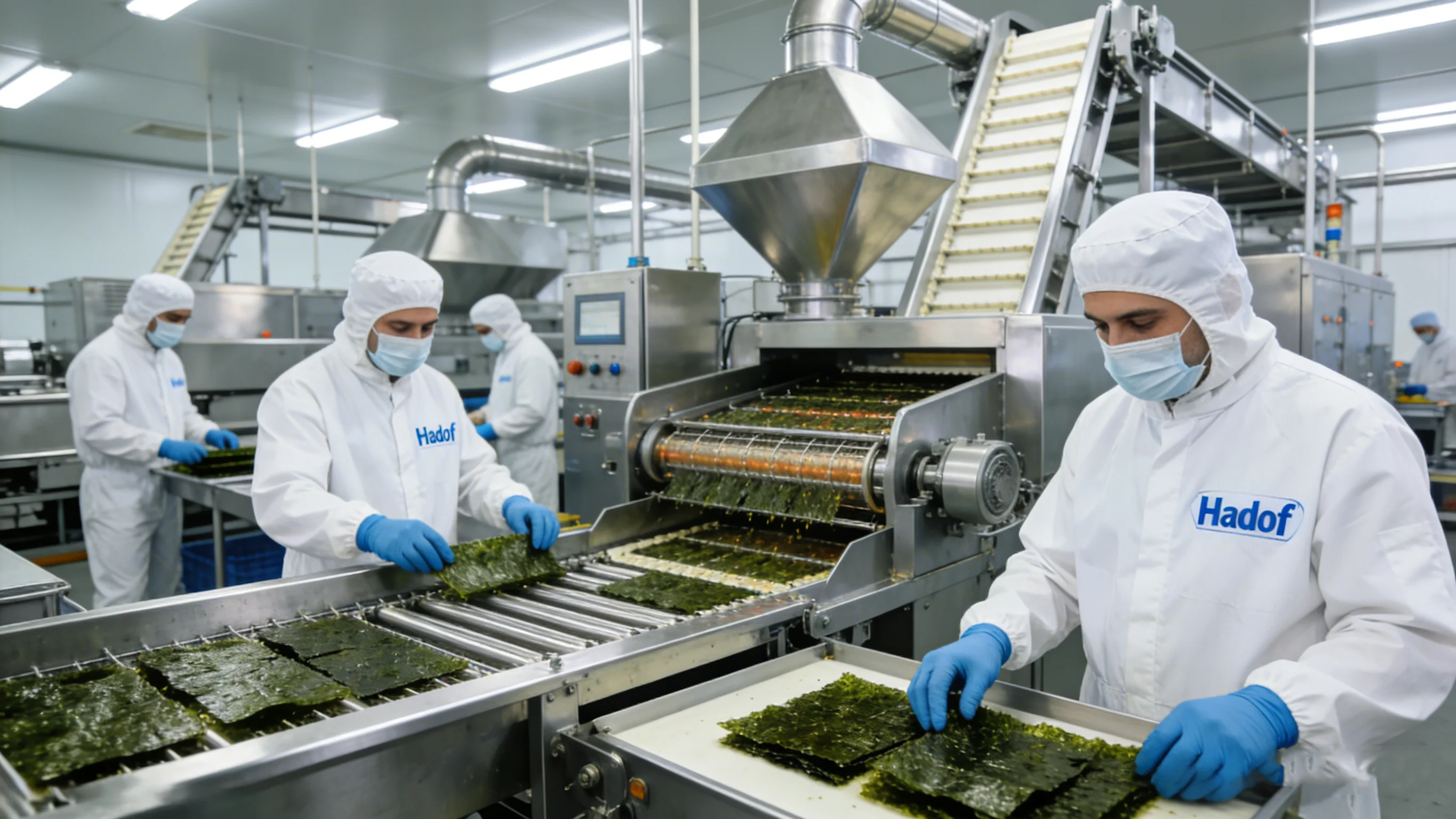
Equipment Configuration: Hadof custom continuous seaweed feeding + dual?zone oil bath frying line (capacity 300kg/h, including automatic seasoning powdering and pillow/can packaging integration)
Commissioning Date: Q3 2023
Korea is the world's largest consumer of seaweed and a major exporter of seaweed snacks. High?quality seaweed produced in Wando?gun accounts for 70% of Korea's total output. Dongwon F&B, one of Korea's top three food groups, had long focused on traditional handmade roasted seaweed for the domestic premium gift market. With the explosive global demand for Korean seaweed snacks (especially in Europe and the US), Dongwon decided to expand capacity and enter overseas supermarket channels. However, during the industrialization of fried seaweed, they encountered challenges that traditional processes could not overcome:
Conflict between thinness and integrity: Premium seaweed is paper?thin. Traditional hand?frying often causes breakage, and thickness variation leads to uneven cooking—some parts burn while others remain undercooked. In automated lines, the loss rate from handling, conveying, and frying reached as high as 25%.
Contradiction between oil temperature and color: Korean consumers prefer fried seaweed with a bright, emerald green color, but high?temperature frying rapidly degrades chlorophyll, turning the product dark and yellow, significantly harming its visual appeal.
Poor seasoning adhesion: The smooth surface of seaweed, especially after frying, makes it difficult for seasoning powders to adhere. Traditional methods result in heavy powder loss, uneven flavor, and failure to meet the stringent consistency requirements of European and American customers.
Seasonal raw material variation: Wando seaweed is harvested in spring and autumn, and different batches vary in thickness and moisture content. A fixed?parameter fryer could not adapt effectively.
Dongwon's technical team had evaluated equipment from several Japanese manufacturers but found that Japanese?style seaweed tended to be thicker and harder, not matching the thin, crispy texture favored in Korea. Through the Korea Food Machinery Association, they initiated joint R&D with Hadof. After six months, we developed this industrial seaweed frying line specifically designed for "Wando seaweed + global flavors."
1. Negative Pressure Flexible Feeding + Porous Titanium Plate Support – Breakage Rate <3% for Thin, Crispy Seaweed
To handle the fragile nature of seaweed, we designed a negative?pressure suction feeding system: whole sheets are held flat on a porous titanium plate conveyor by slight negative pressure, eliminating mechanical gripping and preventing tearing. In the frying section, a Teflon?coated mesh belt combined with flexible pressure rollers keeps the seaweed flat and smooth, raising the finished product integrity rate from 75% to 97%.
2. Dual?Zone Intelligent Frying + Chlorophyll Protection Technology – Locking in the Emerald Color
Based on the thermal degradation characteristics of chlorophyll in Wando seaweed, we designed a dual?zone frying process: Zone 1 at 165°C for low?temperature setting, quickly forming a protective surface film; Zone 2 at 185°C for high?temperature crisping, with total frying time under 28 seconds. A small amount of nitrogen is introduced into the fryer to reduce oxygen concentration and slow chlorophyll oxidation. The finished seaweed retains a bright emerald green color, with color difference (ΔE) reduced by 60% compared to traditional methods, meeting the strict standards of premium supermarkets.
3. Electrostatic Spray Seasoning + Micro?porous Powder Recovery System – Uniform Flavor and 30% Cost Reduction
To solve the seasoning adhesion problem, we added an electrostatic generator that gives seasoning powder a negative charge, causing it to uniformly adhere to the seaweed surface with three times stronger adhesion. At the end of the line, a micro?porous vibrating screen and cyclone recovery unit capture un?adhered powder for recycling, reducing seasoning powder loss from 35% to 8%, saving Dongwon over 400 million Korean won annually in seasoning costs.
4. AI Adaptive Frying Control System – Handling Raw Material Batch Variation
We integrated a near?infrared moisture meter and machine vision thickness scanner to continuously measure moisture and thickness of each seaweed sheet. An AI algorithm automatically adjusts frying time, oil temperature, and belt speed. Even with the significant differences between spring and autumn harvests, finished product moisture content remains stable at 2.0%±0.3, with color consistency reaching 99%.
Capacity and Quality Leap
Daily capacity: Increased from 800 kg/day on the manual line to 6.5 tons/day on the automated line (two shifts), capable of running continuously for 20 days without quality fluctuations. In the first half of 2024, seaweed production exceeded 1,200 tons, with fried seaweed's share rising from 15% to 55%, becoming Dongwon's fastest?growing category.
Channel Breakthrough
The vibrant green color, low breakage rate, and uniform seasoning helped Dongwon pass US FDA, EU organic, and Kosher certifications. Since 2024, the "Dongwon Crispy Laver" series has entered Costco (the largest US warehouse club chain), Tesco in the UK, and Aldi in Germany. Exports to the US grew by 300% year?on?year, and to Europe by 220%.
Economic Benefits
Return on Investment: The plant manager at Dongwon's Wando facility stated: "The manual line required 22 skilled workers; now the entire line runs with just four. We save 1.1 billion Korean won annually in labor costs alone. Combined with lower oil consumption, reduced seasoning loss, and higher yield, the actual payback period was under 16 months."
Product Premium: The perfect appearance and consistent texture achieved through automation allow Dongwon fried seaweed to sell at a 40% higher retail price in European and American markets compared to similar Korean domestic products, yet it remains in high demand, becoming a representative product of Korean premium seaweed exports.
"Hadof's equipment convinced us that industrialization does not mean sacrificing quality, but rather bringing the ultimate thinness, crispness, and emerald color of Wando seaweed to consumers around the world. Now we can confidently say that 'Dongwon fried seaweed is the international standard'."
—— Park Jae-hyun, Head of Seaweed Division, Dongwon F&B