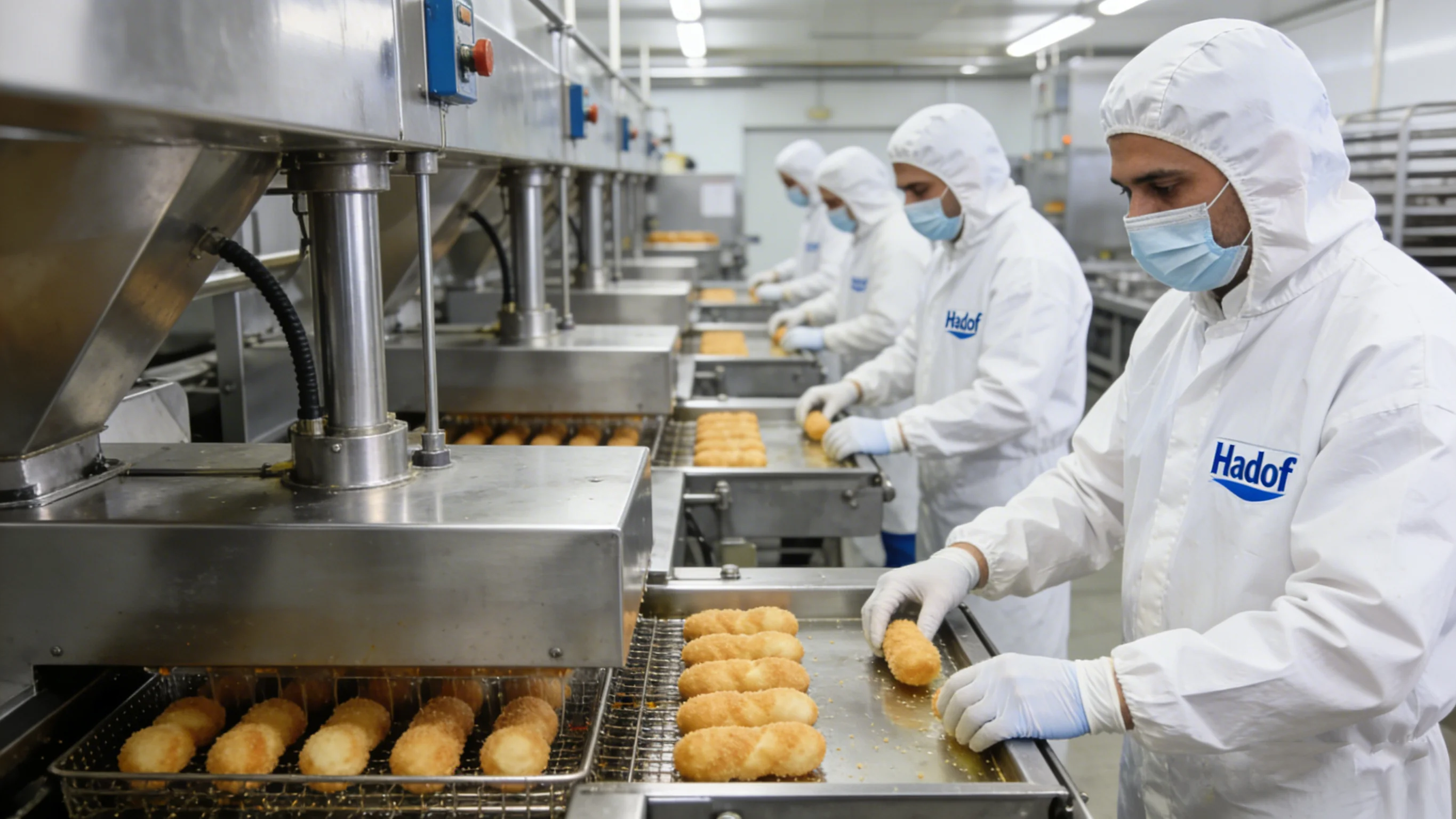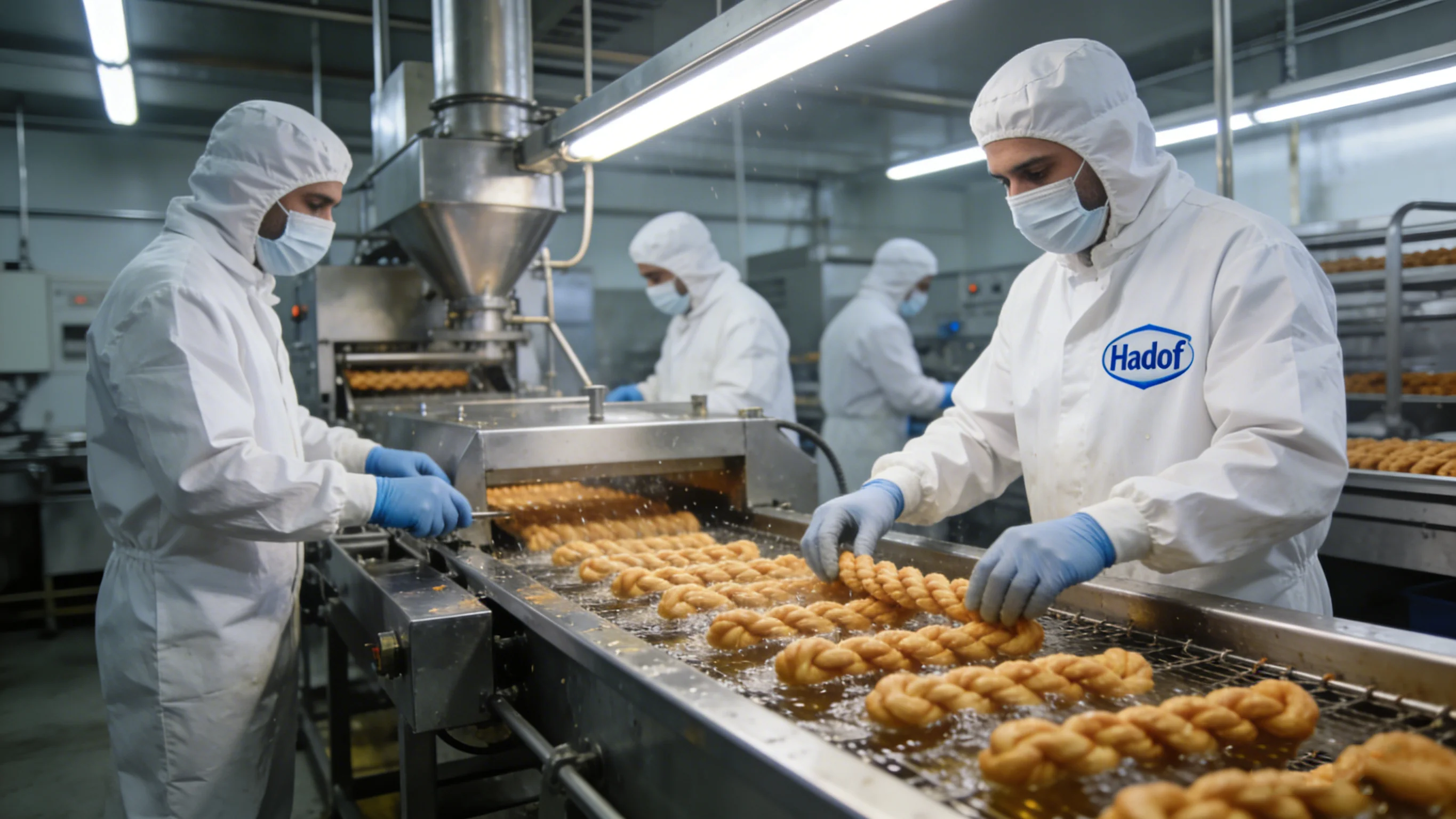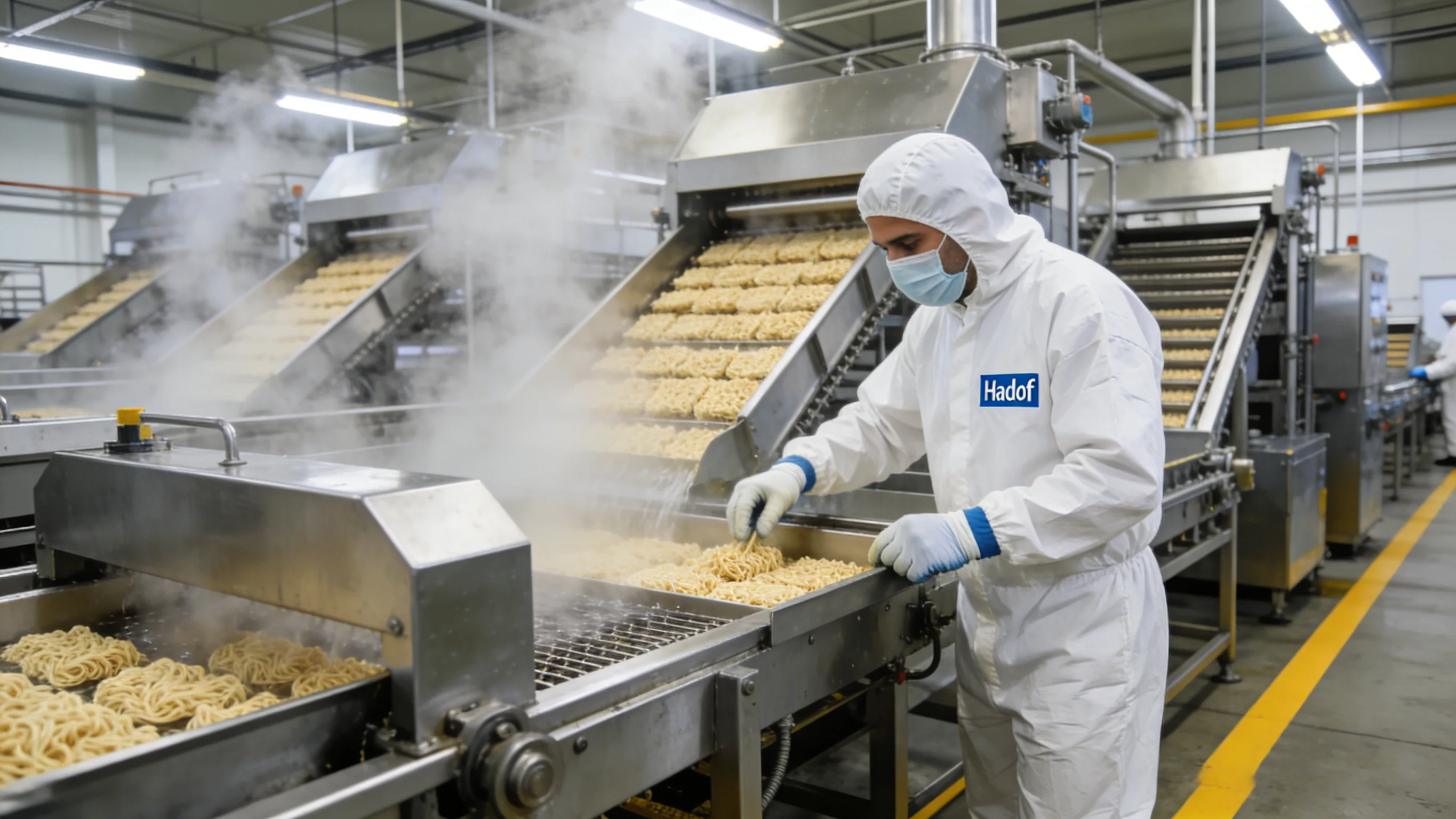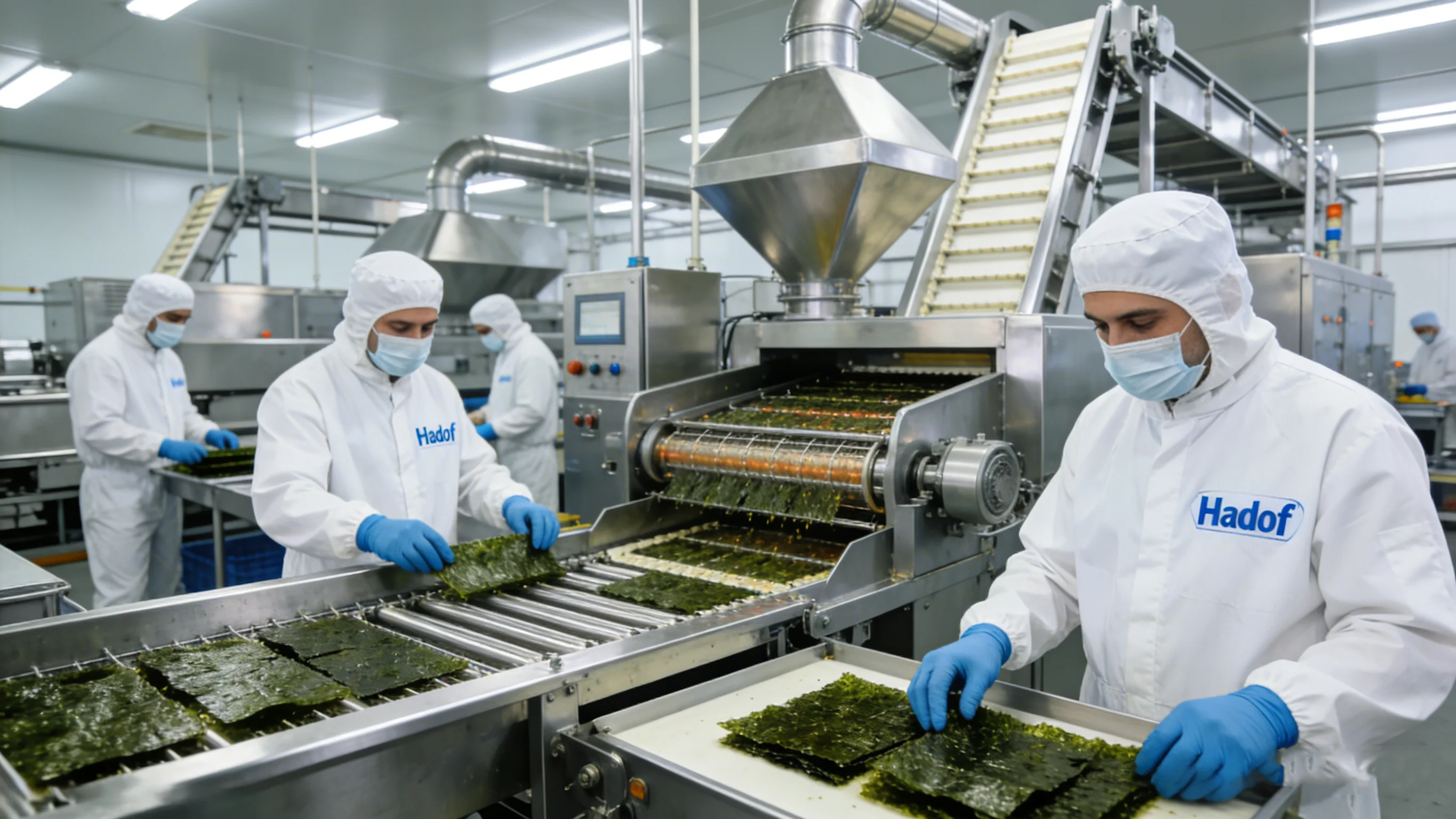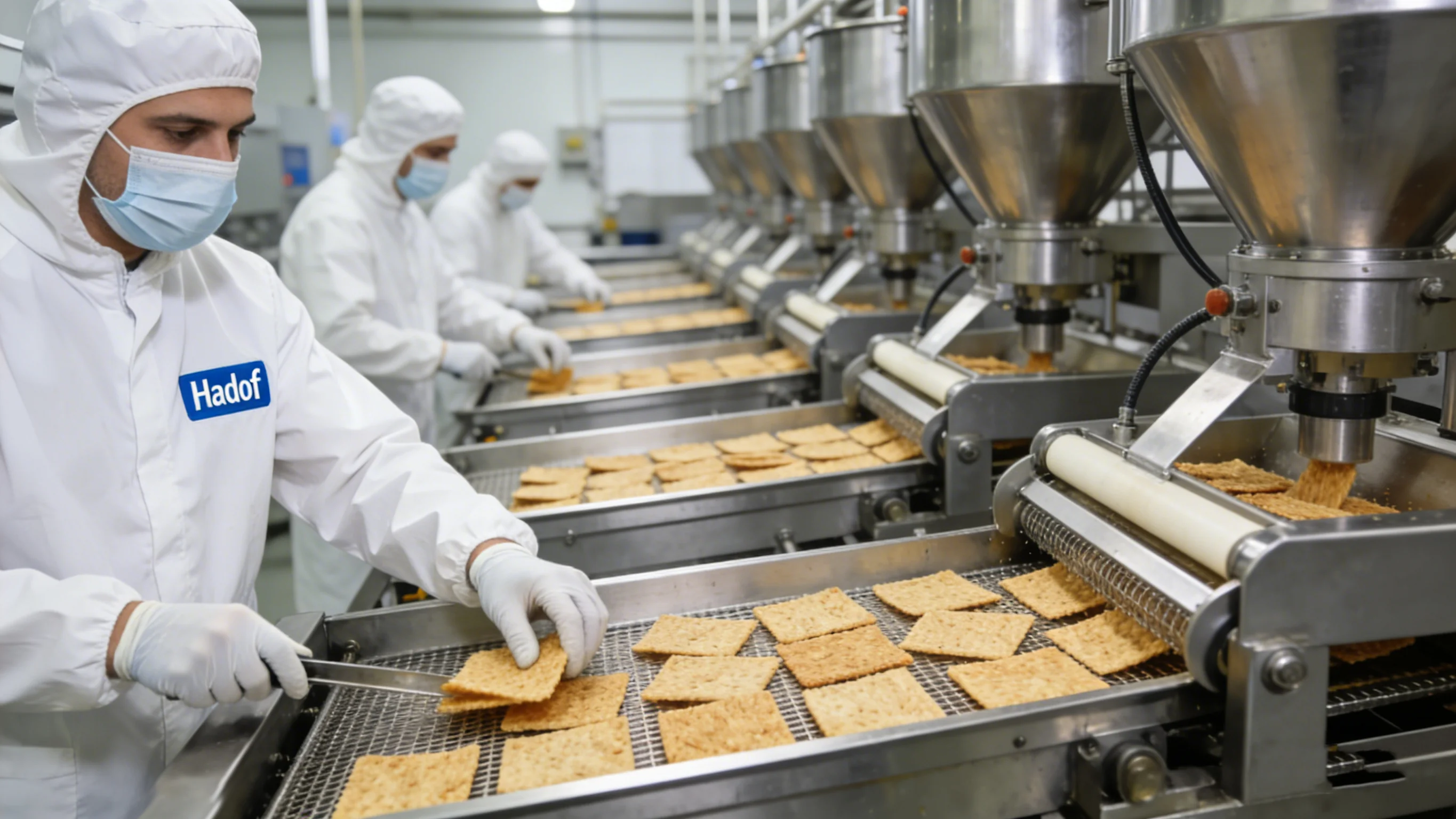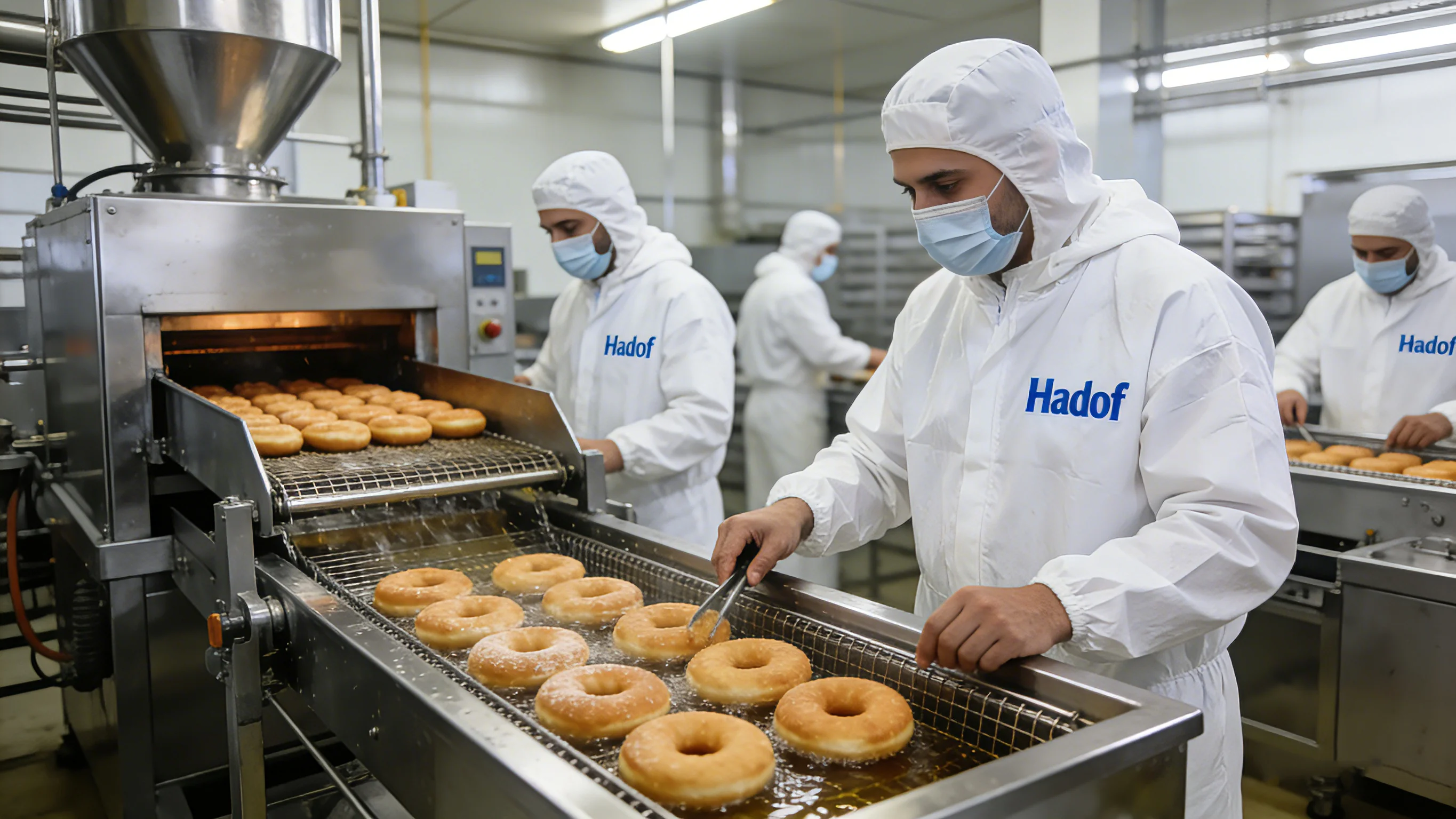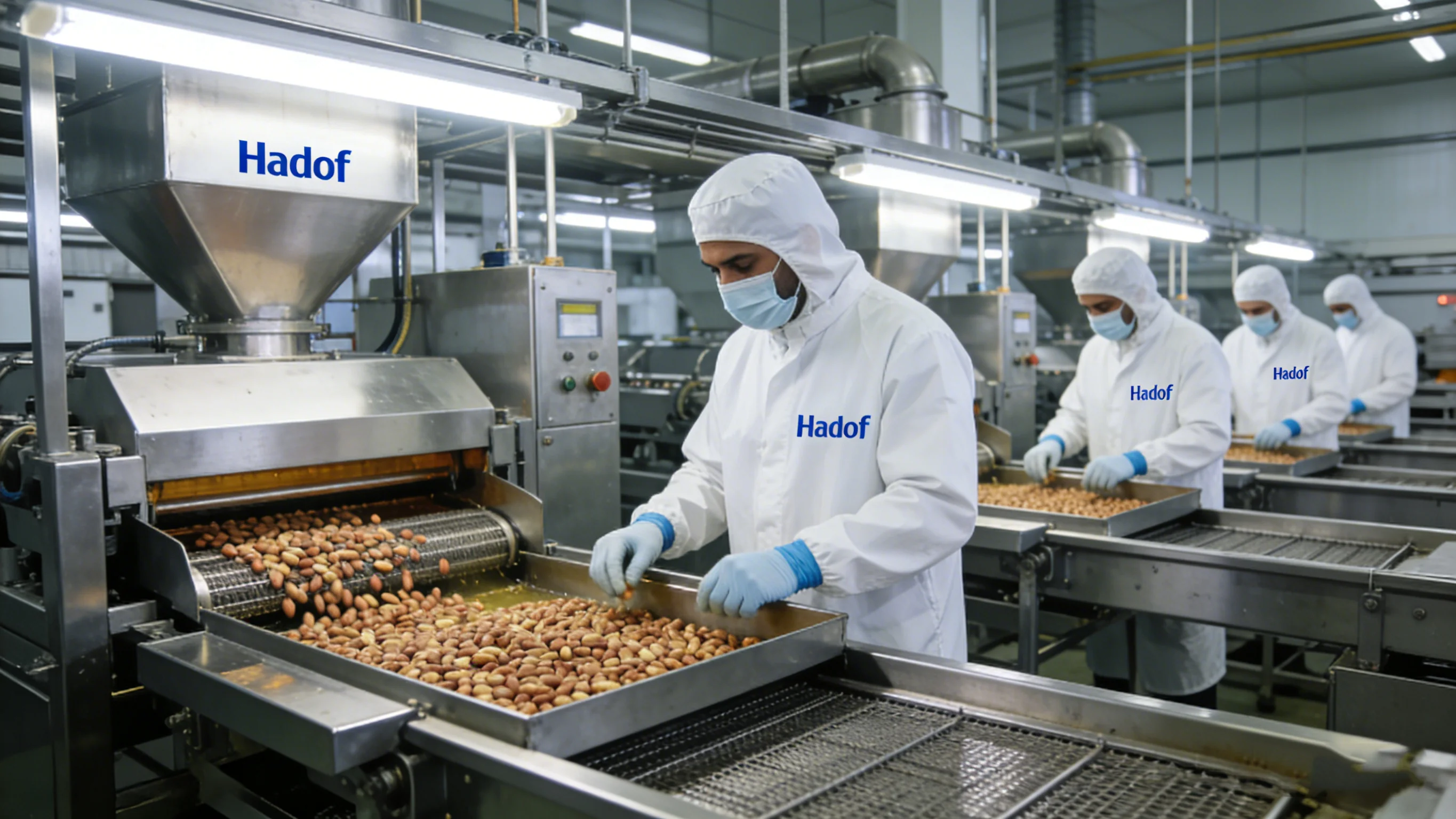

On-site Planning

Installation & Commissioning

Automated & Energy Efficient
Client Name: Haldiram's Snacks Pvt. Ltd.
Country: Republic of India
Region: Jodhpur, Rajasthan – a core traditional snack region in northern India and a premium peanut growing area
Core Products: Salted crispy peanuts, spicy peanuts, mint?flavored peanuts, mixed cashew and peanut snacks
Equipment Configuration: Hadof custom continuous peanut feeding + dual?zone oil bath frying line (capacity 600kg/h, including automatic seasoning drum and nitrogen packaging integration)
Commissioning Date: Q1 2024
India is one of the world's largest peanut growers and a major consumer of peanut snacks. Haldiram's, based in Rajasthan, is a household name in traditional Indian snacks with nearly a century of history. Its peanut products have long held the top market share domestically and are exported widely to Europe, the US, and the Middle East. As global consumers increasingly demand healthier snacks, Haldiram's decided to comprehensively upgrade its traditional peanut production line. However, during industrial frying, they faced challenges that traditional processes could not overcome:
Loss of peanut skin and breakage: Indian consumers prefer fried peanuts with the red skin intact, believing it adds nutritional value. Traditional frying easily stripped the skin, affecting product appearance; mechanical conveying caused breakage rates as high as 12%.
Imbalance between texture and oil absorption: Traditional fried peanuts had oil content exceeding 35%, conflicting with modern consumer demand for low?fat snacks. High?temperature frying also accelerated internal oil oxidation, leading to rancid off?flavors.
Poor seasoning uniformity: Indian flavors are diverse, with high demand for spicy, mint, sweet?and?sour, and other varieties. Traditional seasoning methods resulted in uneven powder distribution—some peanuts were too salty or spicy, others bland—and poor batch?to?batch consistency.
Significant raw material variation: Peanuts from different Indian regions (Gujarat, Rajasthan, Andhra Pradesh) vary greatly in size, moisture content, and oil content. Fixed?parameter fryers could not adapt effectively.
Haldiram's technical team evaluated equipment from several countries before ultimately choosing to partner with Hadof. We didn't just supply a stand?alone fryer; we stationed engineers at their facility for one and a half months to test the characteristics of seven peanut varieties from three major Indian growing regions. The result is this industrial peanut frying line specifically designed for "Indian peanuts + multiple flavors."
1. Flexible Air Conveying + Porous Titanium Plate Support – Skin Retention >95%, Breakage <3%
To solve the problem of skin detachment, we designed a negative?pressure air conveying system instead of traditional mechanical lifting, completely eliminating violent collisions between peanuts and metal parts. In the frying section, a porous titanium plate belt with precise flow control keeps peanuts suspended in the oil as they move slowly forward, preventing mutual compression. The finished product retains 96% of its skin, and the whole?kernel rate increased from 88% to over 97%.
2. Dual?Zone Pulsed Frying + Centrifugal De?oiling – Oil Content Reduced from 35% to 24%
We designed the frying section as two zones: high?temperature pulsed frying followed by low?temperature slow frying. Zone 1 uses 180°C high?temperature pulses (oil spray every 5 seconds) to quickly set the skin; Zone 2 slow?fries at 155°C to uniformly vaporize internal moisture. After the fryer, a centrifugal de?oiling unit removes excess surface oil. The finished product achieves a stable oil content below 24%—11 percentage points lower than traditional methods—with a crisp, non?greasy texture and a 40% reduction in peroxide value (POV).
3. Vacuum Infusion Seasoning + Electrostatic Dry Powder Coating – Adapting to Diverse Indian Flavors, Batch CV <3%
To accommodate India's wide range of flavors, we incorporated a vacuum infusion seasoning system: under -0.08MPa negative pressure, liquid seasonings (mint juice, hot?and?sour sauce) uniformly penetrate the peanut interior. An electrostatic dry powder coating module then gives chili powder, salt, and other dry seasonings a negative charge, causing them to adhere uniformly to the peanut surface with five times stronger adhesion. Continuous production tests showed the coefficient of variation (CV) for flavor dropped from 15% to below 3%, completely eliminating the problem of inconsistent taste across batches.
4. Near?Infrared Smart Detection + AI Adaptive Control – Seamless Adaptation to Multi?Region Raw Materials
We integrated a near?infrared moisture/oil analyzer at the fryer entrance to instantly measure moisture and oil content for each batch of peanuts. The AI algorithm automatically adjusts frying time, temperature, and belt speed, enabling intelligent adaptation from large Gujarat peanuts to small Andhra Pradesh peanuts. Changeover time was reduced from three hours to 15 minutes, and color difference between batches (ΔE) was kept below 1.2.
Capacity and Quality Leap
Daily capacity: Increased from 5 tons/day on the traditional line to 14 tons/day on the automated line (two shifts), capable of running continuously for 25 days without quality fluctuations. Total production in the first half of 2024 exceeded 2,100 tons, with product qualification rate rising from 89% to 98%.
Channel Breakthrough
The low breakage rate, low oil content, and uniform seasoning helped Haldiram's peanuts pass UK BRCGS, US FDA, and Middle Eastern Halal certifications. The new fried peanut series is now available in over 5,000 modern supermarkets across India and is exported to the United States, the United Kingdom, the United Arab Emirates, and Australia. Exports to the US grew by 280% year?on?year, establishing the product as a benchmark for high?end Indian snack exports.
Economic Benefits
Return on Investment: Haldiram's production director stated: "The traditional line required 22 people per shift; now the entire line runs with only four. We save over 5.5 million Indian rupees annually in labor costs alone. Combined with lower oil consumption and higher yield, the actual payback period is under 15 months."
Product Premium: The low?fat healthy label and perfect skin appearance allow Haldiram's peanuts to be priced 55% higher than comparable Indian products in European and American markets, yet they remain in high demand. The company has successfully modernized its traditional snacks.
"Hadof's equipment taught us that true industrialization means not abandoning tradition, but presenting the red skin and diverse flavors of Indian peanuts to the world with international standards. Now our peanuts can proudly sit on shelves in New York and London with their red skin intact."
—— Shiv Kishan Agrawal, Production Director, Haldiram's Snacks Pvt. Ltd.