
On-site Planning

Installation & Commissioning

Automated & Energy Efficient
Client Name: **McCain Foods Limited**
Country: Canada
Region: Florenceville-Bristol, New Brunswick – The "Potato Capital of the World" and global headquarters
Core Products: Classic straight-cut fries, crinkle-cut fries, potato wedges, sweet potato fries, coated fries for air fryers
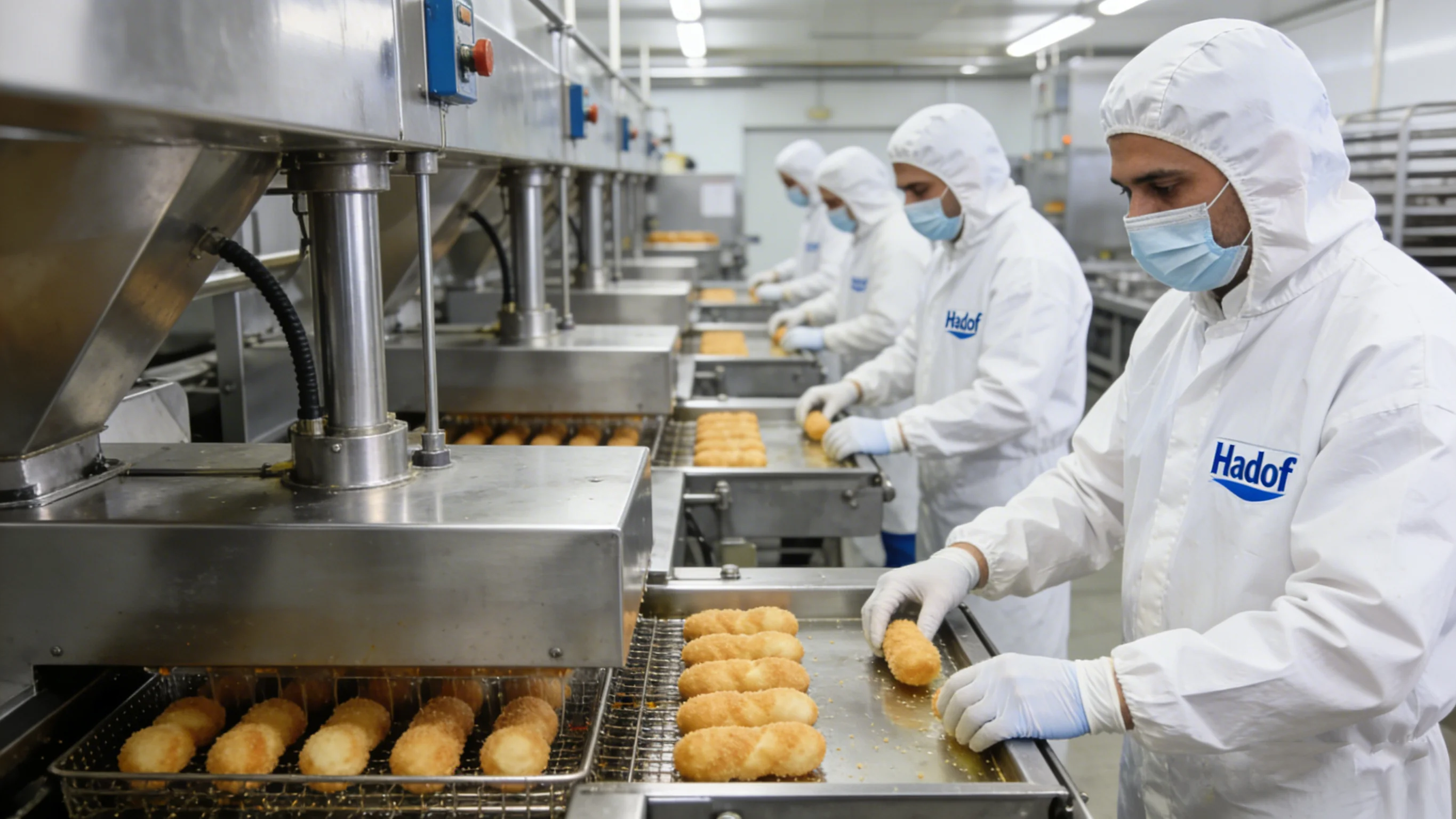
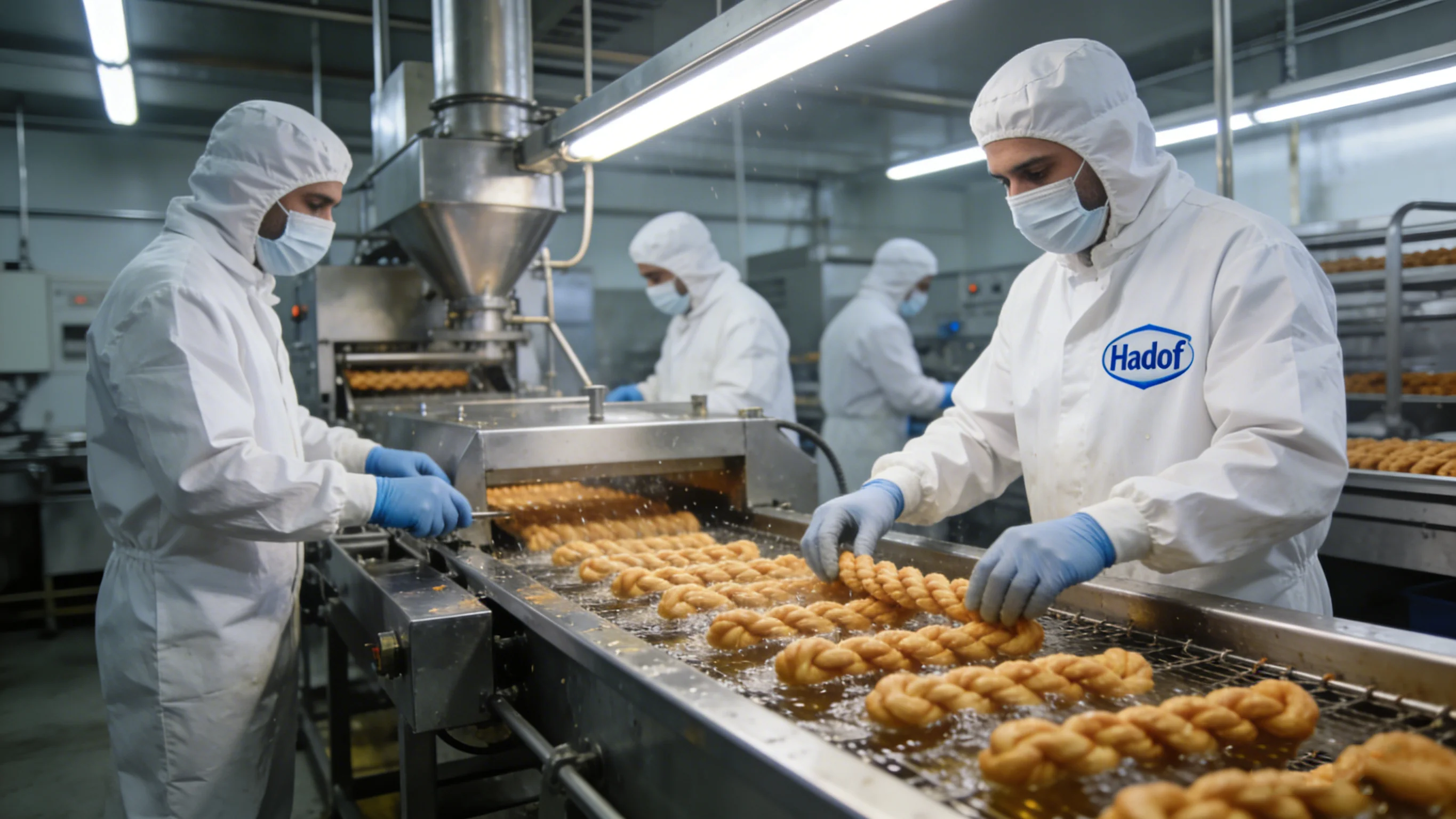
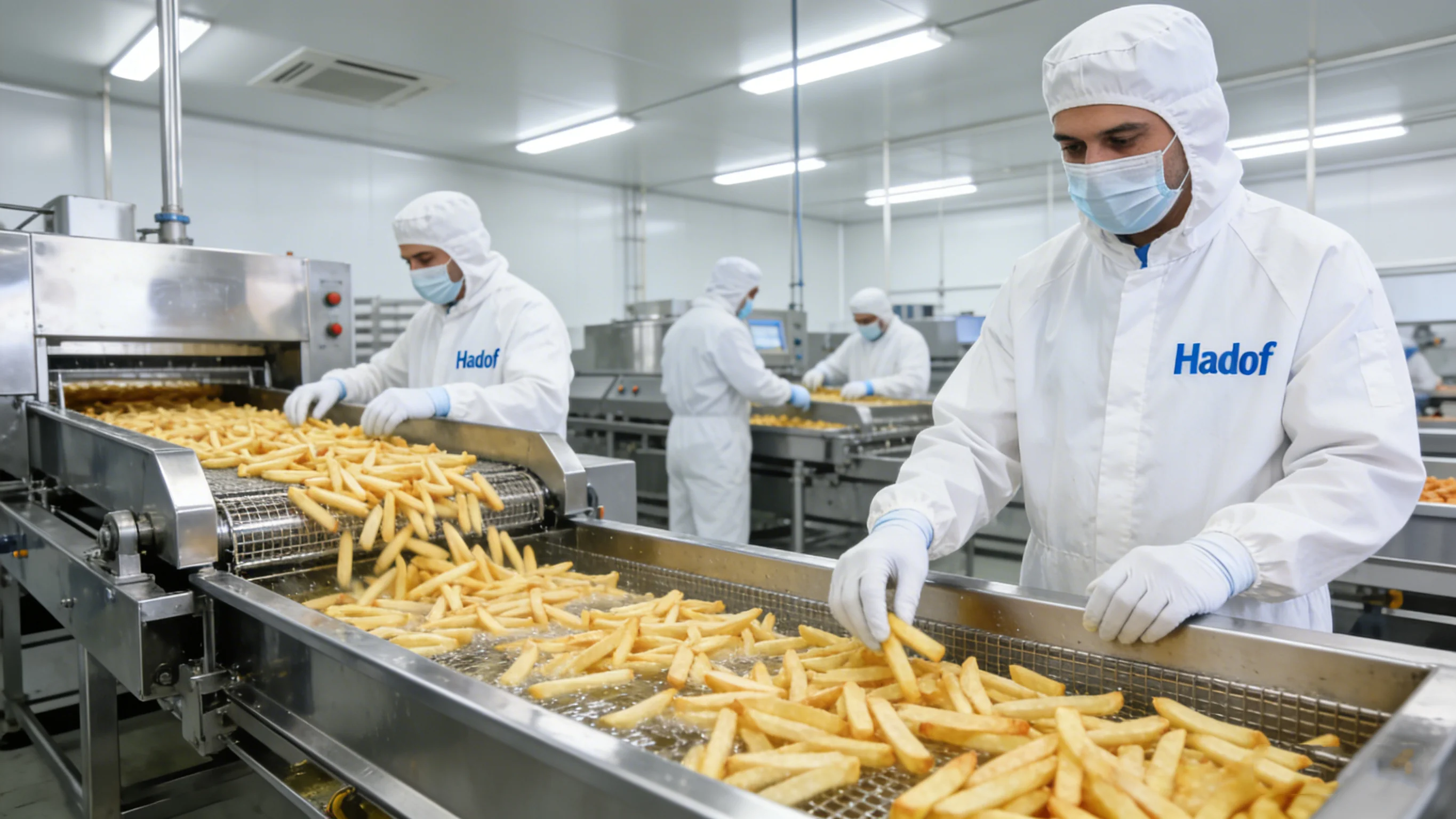
Equipment Configuration: Hadof custom continuous intelligent cutting + dual-zone oil bath frying line (3 tons/hour capacity, including automatic coating system and IQF freezing integration)
Commissioning Date: Q4 2024
Canada is the world's largest exporter of frozen french fries, and New Brunswick is known as the "Potato Capital of the World." **McCain Foods**, as the global market leader in frozen fries with products sold in over 160 countries, faced the need to upgrade its core production lines due to increasingly stringent quality demands from the foodservice sector and the explosion of air fryer home consumption. In industrial frying, they encountered challenges that traditional processes could not overcome:
Difficulty Controlling Interior Softness: Foodservice clients require fries that are crispy on the outside with a soft, fluffy mashed potato-like center. Traditional frying often results in burnt exteriors with raw interiors or dry, hard centers, failing to meet premium foodservice standards.
Coating Adhesion Issues: Air fryer-specific fries require a thin coating to enhance crispiness, but traditional processes often lead to coating detachment during frying, with coating integrity rates below 70%.
Variability Among Potato Varieties: **McCain** uses multiple potato varieties in North America, including Russet, Norkotah, and Ranger, which vary significantly in starch and moisture content. Fixed processes led to inconsistent color and texture.
Balancing Capacity and Energy Consumption: Traditional fryers had low thermal efficiency and high oil consumption per ton, conflicting with **McCain**'s sustainability goals.
**McCain Foods**' global R&D team evaluated equipment manufacturers across Europe and America before ultimately choosing to partner with Hadof. Instead of simply providing a stand-alone fryer, we stationed engineers at the Florenceville-Bristol headquarters for 10 months of joint R&D. We tested 8 major potato varieties and developed this industrial-scale french fry frying line, specifically designed for "North American potatoes + global foodservice standards."
1. Hyperspectral Imaging + AI Starch Detection – One-Key Adaptation for Different Varieties, Consistent Color and Texture
To address the challenge of multiple potato varieties, we integrated a hyperspectral imaging system before the cutting stage to detect starch content and dry matter in real time. The AI algorithm automatically adjusts blanching time, frying temperature, and oil flow rate based on the results: high-starch varieties receive lower frying temperatures (180°C → 170°C) with longer frying time; low-starch varieties receive higher temperatures (180°C → 190°C) with shorter frying time. After frying, the color difference (ΔE) is controlled within 1.0, ensuring consistent texture across batches.
2. Three-Stage Precision Blanching + Dual-Zone Variable Pressure Frying – Crispy Outside, Soft Inside, with 40% Increase in Center Softness
We designed a three-stage blanching process: Stage 1 (85°C) gelatinizes surface starch; Stage 2 (70°C) inactivates enzymes; Stage 3 (50°C) balances moisture. The frying section uses dual-zone variable pressure technology: Zone 1 operates at atmospheric pressure (185°C) for rapid shell setting; Zone 2 uses micro-pressure (0.02MPa) at a lower temperature (165°C) for slow frying, allowing uniform moisture vaporization to create a fluffy interior structure. Testing shows center firmness is reduced by 40%, achieving softness comparable to freshly handmade fries.
3. Electrostatic Coating + Airflow Transfer – Coating Integrity Rate Increases from 70% to 96%
To solve the coating detachment problem, we incorporated an electrostatic coating system: the coating carries a negative charge, allowing it to uniformly adsorb onto the fry surface, increasing adhesion by five times. This is followed by airflow transfer, which pre-dries the coating before frying, completely preventing detachment. Post-frying coating integrity reaches 96%, and crispiness after air fryer reheating improves by 60%.
4. Waste Heat Recovery + Intelligent Combustion Control – 35% Increase in Thermal Efficiency, 25% Reduction in Carbon Emissions
The fryer is equipped with a waste heat recovery module that captures high-temperature exhaust heat for preheating blanching water and plant heating. The intelligent combustion system automatically adjusts heat output based on real-time load, reducing natural gas consumption per ton by 28% and cutting annual carbon emissions by 1,200 tons, supporting **McCain**'s 2030 sustainability goals.
Capacity and Quality Leap
Daily capacity: Per line output increased from 40 tons to 60 tons per shift (two shifts), with consistent quality for 30 consecutive days. Total production in Q1 2025 exceeded 45,000 tons, with product qualification rate rising from 94% to 98.5%.
Channel Breakthrough
The superior crispy texture and consistent quality across multiple potato varieties helped launch **McCain**'s "Chef's Signature" premium french fry series into 25,000 foodservice outlets worldwide, including McDonald's Europe, Burger King Asia-Pacific, and Domino's Pizza. Exports to Asia grew by 45%, establishing absolute leadership in the premium french fry market.
Economic Benefits
Return on Investment: **McCain Foods**' Global Engineering Director noted: "Traditional lines required 12 people per shift; now this line needs only 3. We save over CAD 1.5 million annually in labor costs alone. Combined with lower oil consumption and higher yield, the actual payback period is under 18 months."
Product Premium: Industrial quality comparable to handmade frying allows **McCain**'s premium fries to command a 30% higher selling price than standard fries, making it the company's most profitable product line.
"Hadof's equipment has elevated the process standards of the 'Potato Capital of the World' to a new level. Now, every fry carries the essence of New Brunswick potatoes and world-class frying technology. This is **McCain**'s confidence to lead the industry for the next 100 years."
—— Daniel McCarthy, **McCain Foods Limited**, Global Vice President of Manufacturing