
Site Planning

Installation & Commissioning

Automatic & Eco-friendly
Client Name: G***F
Country: Republic of Chile
Region: Libertador General Bernardo O'Higgins Region – the core fruit production area in Chile's central valley, an export base for cherries, blueberries, grapes and apples
Core Products: Cherries, Blueberries, Grapes, Apples, Peaches, Strawberries, Pineapples, Bananas, Mangoes, Nectarines
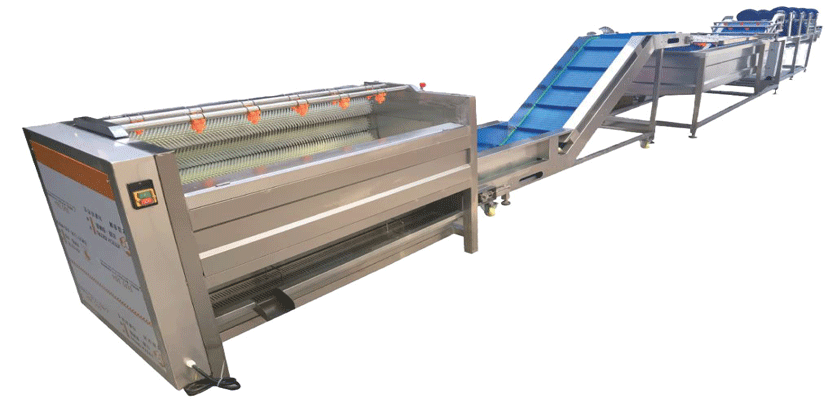
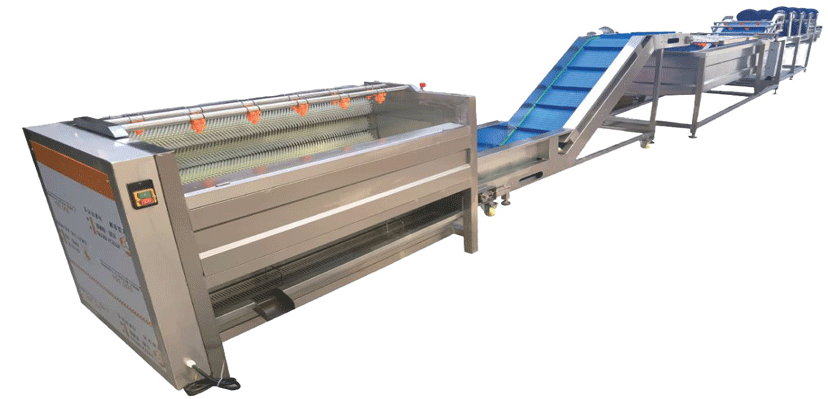
Equipment Configuration: Hadof customized flexible bubble + spray + brush combined fruit washing line (compatible with ice water pre-cooling and fruit wax spraying system)
Commissioning Time: Q3 2024
Chile is one of the world's largest fruit exporters. The unique climate in the Southern Hemisphere makes its cherries, blueberries, grapes and other fruits dominate the Chinese market during the Spring Festival. G***F Group is the largest fruit exporter in Chile's central valley, shipping tens of thousands of tons of fresh fruits to China, the United States and Europe every year. However, as the Asian market's requirements for fruit surface cleanliness become higher and higher, the traditional cleaning mode is facing severe challenges:
Contradiction between Bloom Protection and Cleaning: The natural bloom on the surface of blueberries and grapes is a symbol of freshness. Traditional cleaning easily removes it, resulting in poor appearance and shortened shelf life.
Severe Damage to Delicate Fruits: Strawberries and cherries have extremely thin skins. The damage rate of traditional mechanical cleaning is as high as 8-10%, and rot complaints often occur when arriving at Chinese ports.
Pesticide Residue Risk of Tropical Fruits: Fresh-keeping agents are often used in the cultivation of tropical fruits such as bananas and mangoes. If the surface pesticide residues are not cleaned, they are easily detained by China Customs.
Low Efficiency of Multi-variety Mixed Production: From cherries to blueberries and then to apples, the cleaning processes of different fruits are quite different. The traditional production line needs to shut down for several hours to change varieties, which seriously affects the efficiency during the peak shipment period.
The customer's appeal is very clear: the bloom must be retained to prove freshness, strawberries and cherries must be free of damage, pesticide residues must be completely removed, and it must adapt to the sea transportation cycle of more than 20 days.
After comparing cleaning equipment from the United States and Spain, the customer finally chose our company. Our advantage lies in the in-depth process adaptation for different fruit characteristics, not a general-purpose machine.
Solution: Four Customized Designs for South American Multi-variety Fresh Fruits
1. "Gentle Air Bath" Bloom Retention Technology
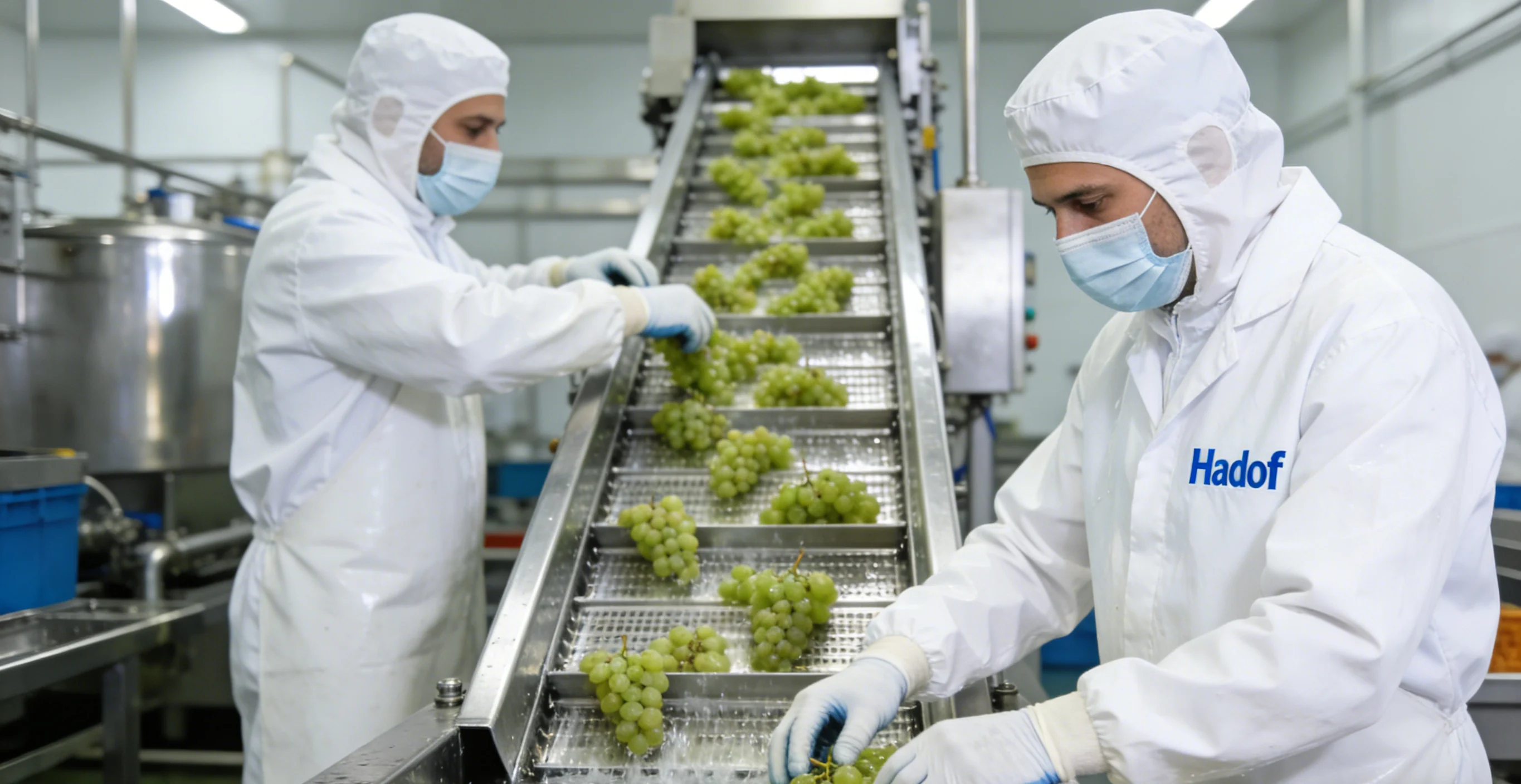
For blueberries and grapes, micro-pressure air tumbling is used instead of mechanical stirring. The flexible impact of air bubbles on the surface removes dust and pesticide residues, while the natural bloom retention rate reaches more than 95%. Tests show that the bloom is intact after cleaning, and the shelf life is extended by 5 days.
2. Sponge Cushion + Variable Frequency Brush, Zero Damage to Strawberries and Cherries
For delicate fruits such as strawberries and cherries, the conveyor belt adopts food-grade sponge cushions with independent grooves for each fruit. The cleaning section adopts variable-frequency flexible brushes, and the speed automatically adapts to the fruit hardness. The damage rate is reduced from 8% to less than 0.5%, and the intact rate is 99.5% when arriving at Shanghai Port.
3. Ultrasonic + Ozone Combined Pesticide Residue Removal
For smooth-surfaced fruits such as bananas, mangoes and apples, ultrasonic cavitation effect is used to penetrate into the tiny pores of the peel, and ozone is used to strongly oxidize and decompose pesticide residues. According to SGS testing, the removal rate of pyrethroid and organophosphorus pesticide residues reaches 98.7%, meeting the strictest standards of China, Japan and the European Union.
4. Integrated Ice Water Pre-cooling + Fruit Wax Spraying
The end of the washing line is integrated with an ice water pre-cooling section (water temperature 1-3℃), which completes the central temperature reduction while cleaning, inhibits respiration, and extends the shelf life. For apples, citrus and other fruits, an optional fruit wax spraying module is available, which automatically sprays edible wax after cleaning for better appearance.
5. Visual Recognition + AI Adaptive Production Change
The entrance of the production line is integrated with an AI visual recognition system, which automatically identifies fruit varieties (cherry/blueberry/apple/mango), automatically adjusts brush speed, spray pressure, water temperature and other parameters within 1 second. The production change time is shortened from 2 hours to 30 seconds, and the daily processing capacity is increased by 40%.
After one year of operation, G***F Group has taken on a new look.
Capacity and Market Breakthrough
Daily processing capacity: increased from the original manual line's average daily 120 tons (limited by production change efficiency) to the automatic line's continuous operation of 220 tons/day, and the shipment volume doubled during the Spring Festival peak.
Chinese market: The cleaned cherries and blueberries, with the selling point of "complete natural bloom retention", have entered high-end channels such as Hema, Sam's Club and Costco, and the price is 25% higher than that of ordinary Chilean cherries. Exports to China increased by 60% in 2024, and the market share ranked among the top three in Chile.
Significant Economic Benefits
Return on investment: The group's production director calculated: "In the past, 150 workers were needed for sorting and cleaning, but now only 12 people are needed for the whole line. Labor costs are saved by more than 2 million US dollars a year, and with reduced losses, the equipment investment is actually recovered in less than 18 months."
Loss reduction: The damage rate of strawberries and cherries decreased from 8% to 0.5%, reducing annual losses by more than 8 million US dollars.
Technological Leadership
Industry benchmark: The production line has become the first "bloom-retaining" fruit washing line in South America, won the "Innovative Export Award" from the Chilean Ministry of Agriculture, and driven the technological upgrading of the entire central valley production area.
"Hadof's equipment allows us to find the perfect balance between freshness and cleanliness. Now Chinese consumers can see the natural bloom of blueberries and eat them directly with confidence. This is the secret weapon for our Chilean fruits to conquer the Asian market."
—— G***F, Group Export Director