
Site Planning

Installation & Commissioning

Automatic & Eco-friendly
Client Name: S***R
Country: Kingdom of Norway
Region: M?re og Romsdal – the core fishing ground along Norway's Atlantic coast, the main producing area of salmon, mackerel, sardines, and king crabs
Core Products: Sardines, Mackerel, Salmon, Cod, Catfish, Oysters, King Crab, Blue Mussels, Oysters
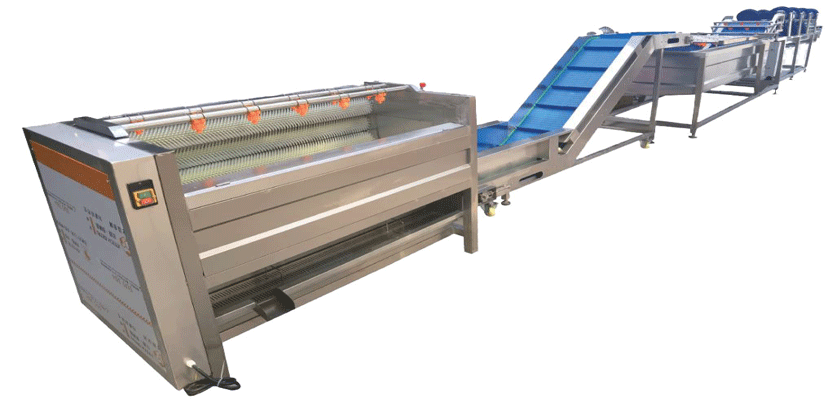
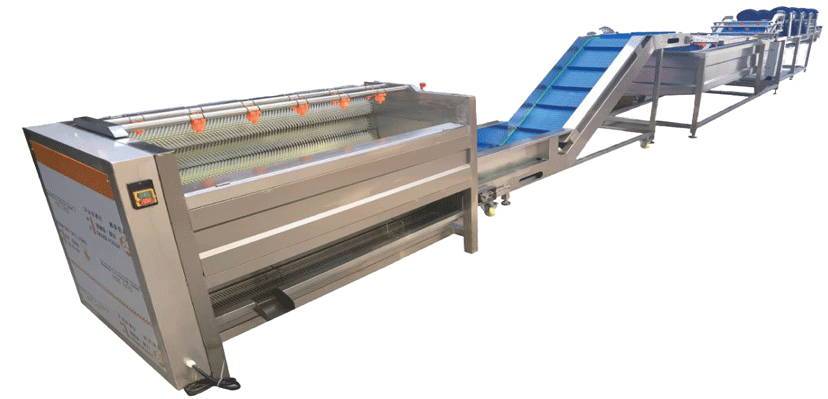
Equipment Configuration: Hadof customized flexible spray + ultrasonic + brush combined seafood washing line (compatible with seawater circulation and ice-temperature fresh-keeping system)
Commissioning Time: Q3 2024
Norway is one of the world's leading seafood exporters. The cold and pure Atlantic water breeds globally recognized high-quality seafood. S***R Seafood Group is the largest seafood processing enterprise in western Norway, supplying products to Michelin restaurants in Europe, sushi shops in Japan and high-end supermarkets in the United States. However, with the global consumers' extreme pursuit of seafood freshness and cleanliness, traditional cleaning methods are facing severe challenges:
Easy Loss of Sardine Scales: For silver-skinned fish such as sardines and mackerels, traditional high-pressure cleaning causes a large number of scales to fall off, losing natural luster.
Sediment Hidden in Oyster Shells: Oyster shells have deep folds, and sediment and vine residues in the gaps cannot be removed by conventional spraying, leading to multiple rejections by European customers.
Difficult Removal of Impurities in Crab Gills: The gill structure of king crabs and ordinary crabs is complex, with sediment and microorganisms hidden in it, which cannot be reached by traditional cleaning, resulting in high mortality during live transportation.
Hard to Treat Catfish Mucus: Catfish epidermis is rich in mucus, which can only be partially washed off by traditional cleaning. Residual mucus accelerates corruption and shortens shelf life.
Osmotic Stress from Water Conversion: Sudden contact with fresh water during seafood cleaning leads to the death of some shellfish due to osmotic pressure changes.
The customer's appeal is very clear: complete scales retention, thorough shell gap sediment removal, no shellfish damage, mucus removal, and maintaining seafood freshness throughout the process.
After comparing cleaning equipment from Iceland and Denmark, the customer finally chose our company. Our advantage lies in the in-depth process adaptation for different seafood characteristics, not a general-purpose machine.
Solution: Four Customized Designs for Nordic Multi-variety Seafood
1. Micro-pressure Air Curtain + Flexible Spray, 98% Scale Integrity Rate
For silver-skinned fish such as sardines and mackerels, micro-pressure air curtain technology is adopted, using 0.3kg/cm2 air flow impact instead of high-pressure water guns to gently remove surface adhesions. With flexible fan-shaped spray (pressure 2kg/cm2), the scale integrity rate is increased from 70% to 98%.
2. Ultrasonic Cavitation + Pulsed Water Flow, Zero Sediment in Oyster Shell Gaps
For the complex folds of oysters, a 40kHz ultrasonic field is superimposed in the cleaning tank, and the cavitation effect goes deep into the deepest part of the shell gaps to "shake" the hidden sediment. With pulsed water flow (10 intermittent sprays per second), impurities are completely washed out.
3.定向 Gill Washing + Vibration Drainage, 99% King Crab Survival Rate
A special directional nozzle group is designed for the crab gill structure, which accurately rinses the gills at a 45° angle to wash away sediment and microorganisms. After cleaning, it immediately enters the vibration drainage section to remove shell surface moisture and avoid water accumulation in the gills.
4. Weakly Alkaline Electrolyzed Water + Soft Brush Washing, 99% Catfish Mucus Removal Rate
For catfish mucus, pH8.5 weakly alkaline electrolyzed water is used for cleaning, with soft silica gel brush rollers, the mucus is emulsified and decomposed instantly and completely removed within 15 seconds without any damage to the fish skin.
5. Circulating Seawater Cleaning + Ice Temperature Synchronization, 20% Higher Survival Rate
The entire washing line uses filtered circulating seawater (salinity 3.5%) to avoid fresh water stress. The seawater is integrated with an ice water system with a constant temperature of 2-4℃, completing pre-cooling while cleaning to reduce metabolism.
After one year of operation, S***R Seafood Group has taken on a new look.
Capacity and Market Breakthrough
Daily processing capacity: increased from 80 tons per day of the original manual line to 200 tons per day of continuous operation of the automatic line, with on-time delivery rate rising from 75% to 99%.
Channel upgrade: The cleaned sardines, oysters and king crabs have entered top channels such as Tokyo Tsukiji Market, French Bristol Hotel and American Whole Foods, with prices 40% higher than ordinary seafood. Exports to Japan increased by 150% in 2024.
Significant Economic Benefits
Return on investment: "180 workers were needed for sorting and cleaning in the past, but now only 12 people are needed for the whole line. Labor costs are saved by more than 2.5 million euros a year, and with reduced losses, the equipment investment is recovered in less than 18 months."
Loss reduction: Sardine scale loss reduced by 90%, king crab transportation mortality reduced from 8% to 1%, reducing annual losses by more than 6 million euros.
Technological Leadership
The production line has become the first washing line in Norway certified by the EU "Live Seafood Cleaning", won the "Innovation Export Award" from the Norwegian Seafood Council, and driven the technological upgrading of the entire Norwegian west coast fishing grounds.
"Hadof's equipment allows our Norwegian seafood to still 'breathe' in Tokyo. Japanese customers say our king crabs are still alive when they arrive in Tsukiji, and oysters can be eaten raw directly after opening. This is the pure gift from the cold Nordic fjords to the world."
—— S***R, Group Export Director